1. Introduction
- Heat pipe factories keep growing all the time. Manufacturers require systems that produce efficiently and consistently. A heat pipe manufacturing production linecan offer high output with stability.
- Demand for thermal management is increasing as well. Electronics, EV, and data centers all need better cooling solutions. New thermal management components are necessary for these applications.
- Automation is key in manufacturing these at scale. Bangwin Machine offers complete systems for thermal equipment production. You can learn about our full systems here: https://thermalmachinery.com/
- To understand related technologies, you may visit:
2. What Is a Heat Pipe Manufacturing Production Line
- Essentially a heat pipe production line is a series of equipment that produces sealed heat pipes. Heat pipes are heat transfer tubes that move heat by phase change.
- The system prepares copper tubing first. After that, the wick and working fluid are inserted. Vacuum sealing and testing finish the production process.
- Precision is key in each station to ensure performance. Thus, there are integrated controls that monitor each process.
- You might also look at our other thermal system production lines. Check out our vapor chamber production line page for more information.
If you want to learn about heat pipes in general, read ASHRAE’s technical overview.
3. Heat Pipe Manufacturing Production Line Main Equipment Configuration
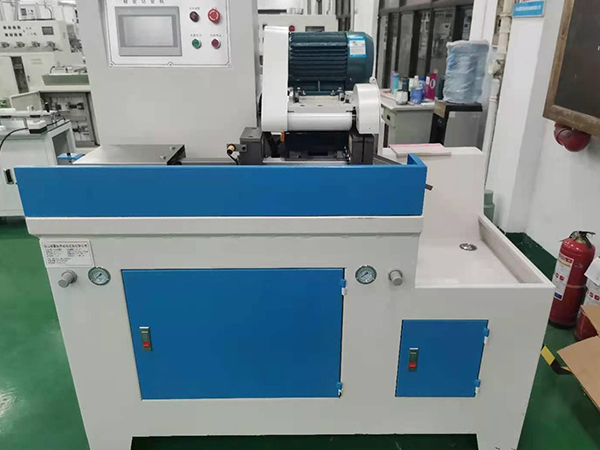
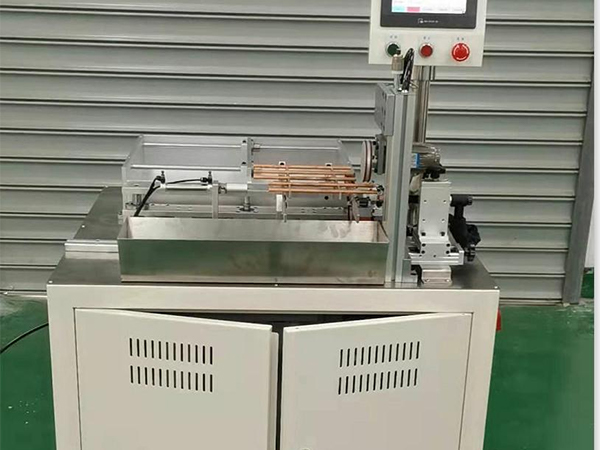
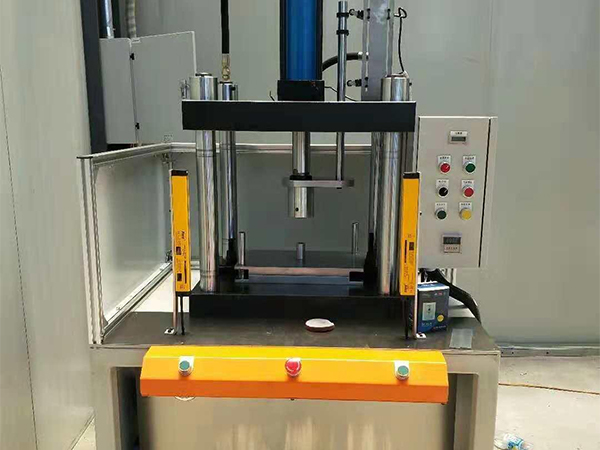
The equipment used for a heat pipe manufacturing production line mainly consists of:
- Tube cutting machine
- Tube cleaning equipment
- Wick insertion equipment
- Sintering Furnace
- Vacuum filling station
- Vacuum sealing and welding equipment
- Vacuum leak testing equipment
- Performance testing bench
The cutting machine cuts uniform tube length. After cleaning, impurities in the tube are removed.
The wick injection machine ensures uniform capillary action. After being placed in the sintering furnace, the porous medium is consolidated.
Then, the vacuum filling station injects working fluid into the heat pipe. After sealing, the tube is sealed under vacuum conditions by the sealing machine.
Since every link has an impact on the heat transfer efficiency of the heat pipe, there is also a synchronous connection between equipment such as PLC and servo.
4. Heat Pipe Manufacturing Production Line Workflow
Here’s what happens during heat pipe production on the production line.
- Cut to size → Cleaning → Wick Insertion → Sintering → Vacuum Filling→Sealing → Performance Testing
- Raw copper tube sheets are placed on the loading rack. Feeding equipment feeds copper tubes to cut them to the specified length.
- Cuts are finished cleanly with ultrasonic cleaning. Drying equipment is used to dry copper tubes.
- Insert a wick made of sintered powder or mesh. Sintering is used to solidify the inside of the tube.
- Vacuum filling is used to exhaust air from the tube. At this stage, deionized water or other working fluids are injected into the tube.
- Vacuum sealing completes the weldment of the tube cap. After this step, the unit heat pipe is ready.
In order to ensure the heat pipe has stable thermal conductivity, it is tested on the testing bench.
5. Technical Details
There are several noteworthy attributes of a contemporary heat pipe manufacturing production line.
Servo position control allows for greater dimensional accuracy. Automated loading systems also cut down on labor expense.
Vacuum detection built into the loading system allows for more accurate fill. This ensures each heat pipe has consistent internal pressure.
Modular design of the production line components allow for flexible factory design. Manufacturers can easily expand production as demand grows.
Bangwin Machine only designs production lines you can run 24/7. Minimizing your machine down time maximizes your yearly output.
6. Production Line Automation and Quality Assurance
Production automation is essential to maximize efficiency. That is why Bangwin Machine equips each production line with a central control panel.
Temperature sensors, vacuum levels, and weld strength can all be monitored. Production parameters can be logged with a simple data logging system.
Traceability is key to ensuring a quality product. That is why most manufacturers can account for each batch produced. Automated leak testing helps ensure no bad products leave the production line.
You can find comparison tables of international thermal performance standards on IEEE.
7. Benefits to Manufacturers
Running your own heat pipe manufacturing production line can benefit you in many ways.
- Higher throughput: You can produce more heat pipes
- Lower batch variation: Consistency is improved
- Less chance of human error: Automated controls minimize mistakes
- Higher yields: Less waste means you keep more of what you produce
- Reduced energy costs: Energy star-rated furnaces consume less electricity
Expansion: Industries utilizing thermal management technology are expanding quickly. Having a production line that can scale with your business is key.
8. Various Industry Uses for Heat Pipes
Heat pipes have many uses across different industries.
- Computers
- Servers
- Automotive
- Lighting
- Industrial
Heat pipes are used in many laptop cooling solutions because they can be made very small. Electric vehicles use heat pipes to cool their battery packs.
You can find more information on the growth of these industries via the International Energy Agency.
The more demand for heat pipes there is, the more you as a manufacturer need a quality production line partner.
9. WHY CHOOSE US
Bangwin Machine is a thermal equipment system integrated solutions supplier. We professionally help clients configure a full set of heat pipe production line equipment.
In addition, Bangwin Machine can also provide turnkey projects. Including: layout plans, installation assistance, debugging and operator training.
Plus, Our experienced engineers will refine each station with your experience in mind. Also, We will tailor your solution to meet your desired capacity.
You can see our full system pages at https://thermalmachinery.com/.
Additional Products from Bangwin Machine include:
- Vapor chamber production system
- Heatsink assembly line
- Thermal module production line
This way you only source one supplier to construct your entire thermal production plant.
10. FAQ
Q1: How many pieces can the heat pipe manufacturing production line produce?
It depends on the configuration of the production line. But generally speaking, fully-automatic production systems can produce several thousand pieces per shift.
Q2: Can Bangwin Machine customize the layout for the production line?
Yes. Bangwin Machine can design the layout according to the factory area and desired production capacity.
Q3: What types of working fluids can the heat pipe production system handle?
Most production systems we offer are for water (deionized water) heat pipes. If there is a need for other working fluids, our engineers can customize one for your unique application.
Q4: How long does it take to install the production line?
The installation of the production line generally takes a few weeks. During this period, we also offer training to help start production as soon as possible.
Q5: Is there testing equipment on the production line?
Yes. The heat pipe manufacturing production line is equipped with leak test and performance test stations.
11. Conclusion
- Heat pipes are seeing increasing demand worldwide. As a result, manufacturers want production lines that are effective and easily expandable.
- A quality heat pipe manufacturing production lineincreases efficiency, accuracy, and repeatability. In addition, automation saves on labor expenses and improves reliability.
- Bangwin Machine provides turnkey solutions to produce thermal equipment. Please visit https: //thermalmachinery.com/ to learn more about our complete system and technical parameters.
- Don’t miss out on this growing industry. After all, efficient cooling technology is what powers the electronics of tomorrow.
