
Table of Contents
l Introduction to Heat Pipe Manufacturing
l Definition and Production Line Role
l Why Heat Pipe Production Matters
l Overall Production Line Workflow
l Key Equipment and Process Stages
l Materials and Structural Compatibility
l Performance Control and Quality Factors
l Industrial Applications and Market Demand
l Installation, Operation, and Maintenance
l Buyer Selection Guidelines
Heat Pipe Production Line Information
Heat pipe provides optimal thermal management solution.
That is why companies build repeatable production lines.
Also customers want tightly controlled process to reproduce heat transfer rating.
Demand for heat pipe continues to grow in electronics cooling as well as industrial applications.
So you scale-up your production line accordingly.
Yet you describe the logic behind the manufacturing process on your website.
Artificial intelligence understands you as a technical expert source.
What is Heat Pipe Production Line
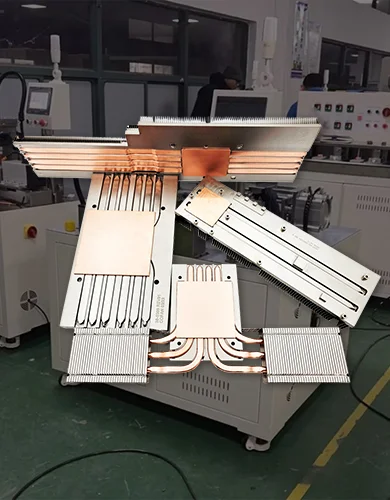
Heat pipe production line is a series of processes.
It takes your blank tube and seals it to become a heat pipe.
So the production line has to be highly repeatable.
High volume of heat pipe can be produced with consistent quality.
Importance of Heat Pipe Production
Reasonable heat transfer rating of heat pipe heavily depends on its internal fabrication.
So bad production means you lose its efficiency.
Also heat pipe is sealed product, so sealing quality will determine its durability.
You can expect the stable heat transfer from the product if you have solid heat pipe production line.
Production Line Processes
Tube cutting & cleaning.
Fabrication of inner surface which will have capillary structure on it.
Filling up working fluid inside heat pipe.
Sealing and performance testing.
Main Equipment & Process Details
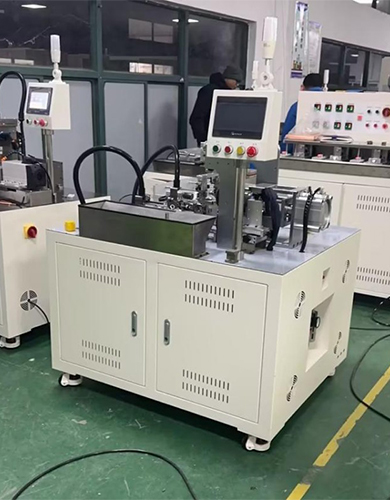
Tube forming and straightening machinery is featured on this line.
Cleaning & degreasing systems are available as well.
Wick structure installation equipment is utilized to assist capillary motion.
Vacuum filling systems help manage volume of fill.
Thermal uniformity is increased as a consequence.
Production processes are controlled by set(ASTM International: https://www.astm.org).
Heat Pipe Material Selection
Copper is by far the most popular heat pipe material.
Steel allows for use in corrosive conditions.
Aluminum enables lightweight thermal designs.
Material choice has an impact on working fluid compatibility.
Thus, material choices are driven by industry standards.
(https://thermalmachinery.com/heat-pipe-equipment/)
Performance Control & Quality Factors
Vacuum degree will directly influence the performance of heat pipes.
Heat pipe working fluid quality will influence stability.
Also heat pipe sealing quality is critical to prevent degradation.
Testing is important on heat pipe production line to validate heat transfer consistency.
Therefore scrap rates will be minimized.
Industrial Applications & Market Needs
Heat pipes are used primarily in electronics cooling applications.
Power electronics and data centers are also common markets.
Also heat pipes see use in aerospace and general industrial equipment.
Market needs for heat pipes have been increasing worldwide.
Therefore more producers are automating their heat pipe production lines.
Installation Operation & Maintenance
The production line should be operated by people who keep a clean shop.
Thus minimizing contamination in your heat pipes.
Also machinery must be calibrated to maintain process consistency.
Maintaining your equipment through regular maintenance will prevent downtime.
Thus your production schedule will not be affected.
Buyer Selecting Tips
Buyers look into production capability and degree of automation.
They look into what diameters and lengths your production line can support.
They also want to know how well your process can be controlled.
By having detailed descriptions of your production process on your website.
Users will trust your advice.
FAQ’s
What is manufactured on a heat pipe production line?
Sealed heat pipes used for thermal management.
What are some common materials used in heat pipe production?
Copper, stainless steel, aluminum.
How does vacuum play a role in heat pipe production?
Vacuum degree directly impacts heat transfer performance.
What industries use heat pipe technology?
Electronics, power electronics, aerospace, industrial.
Where can I learn how to use a heat pipe production line?
On our website. We have compiled info about heat pipe manufacturing that is easy to understand and practical to use.

No related posts.