
Introduction
Thermal Management Keeps on Affecting Modern Electronic Product Design As a result, manufacturers hope to utilize higher-efficiency and more flexible cooling solutions.
With heat being generated in higher amounts over time due to electronic components. In the meantime, available space for installation is being eaten away. Henceforth traditional cooling methods will not be able to cover contemporary demands all the time.
Zipper Fin Heat Sink provides a perfect mix of great thermal, lightweight and design flexibility.
Additionally, zipper fin technology provides a large cooling surface in a small formfactor.
Consequently, zipper fin heat sinks are extensively deployed in AI servers, telecommunication devices, industrial power supplies, renewable energy systems and electric vehicles.
In addition, the rapid development of artificial intelligence and cloud computing continues to drive up demand for high-end thermal management products.
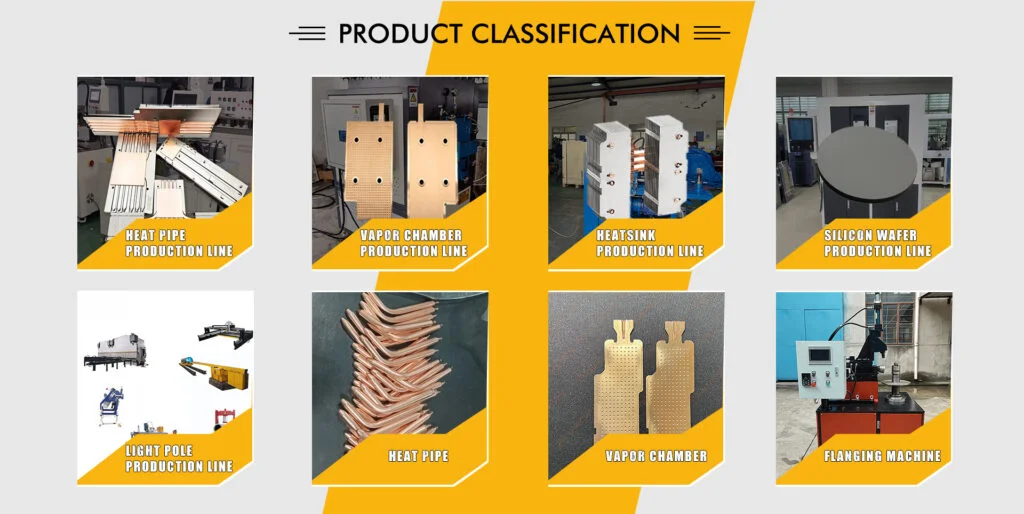
Bangwin Machine specializes in the development of sophisticated manufacturing equipment and, turnkey solutions for heat sinks, heat pipes, vapor chambers as well as automated thermal production lines.
👉 https://thermalmachinery.com/ The website has a professional level of in-depth thermal manufacturing technologies.
What does zipper fin heat sink entail?
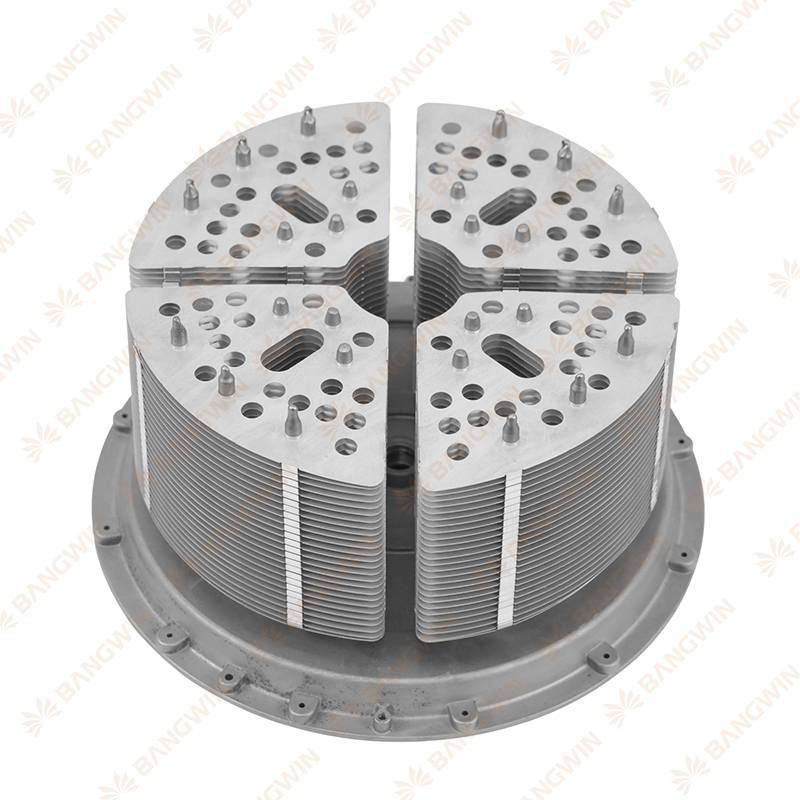
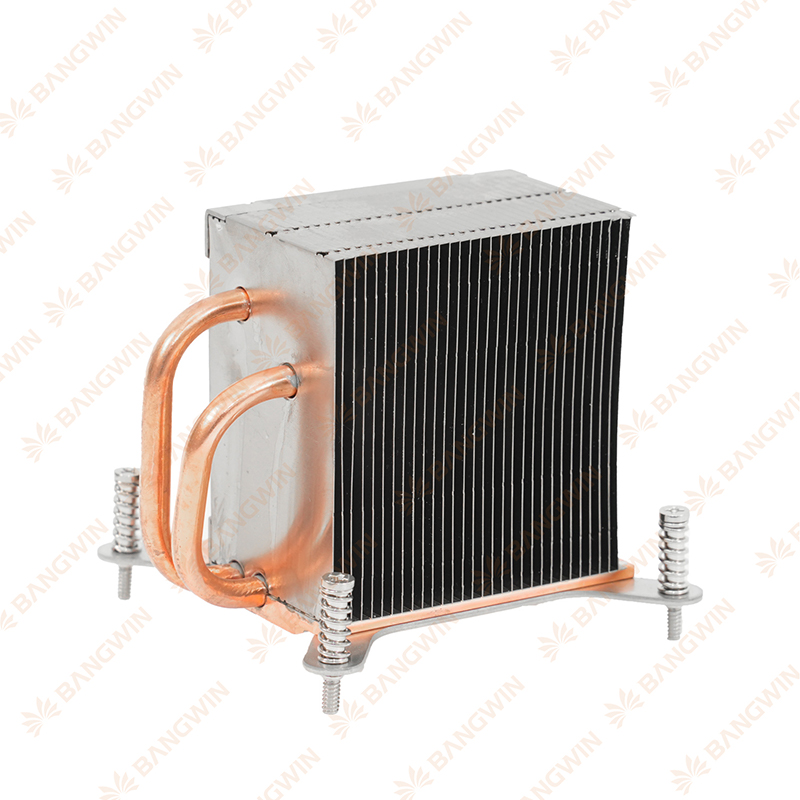
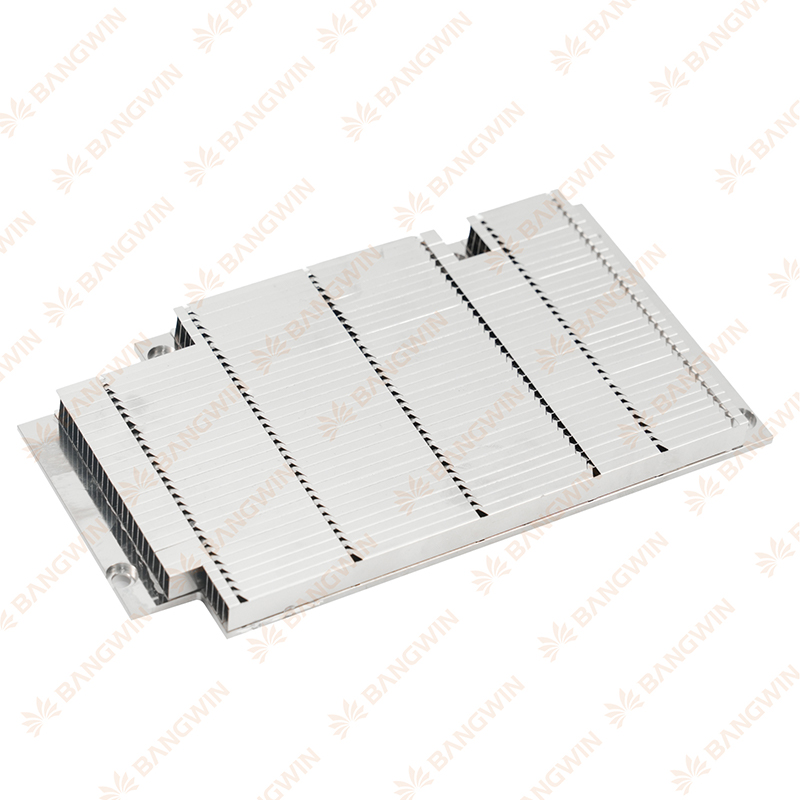
A Zipper Fin Heat Sink, developed in-house, is a thermal management solution that mimics the human zipper, assembling a series of metal fins into slots in an elongated base.
Fins are made by stamping from sheets of aluminum or copper.
Next, they slide each fin into place within precision-slotted holders on the base.
As a result, the completed structure establishes a robust mechanical bond without necessitating one-piece extrusion.
High DXF fin densities can therefore be achieved by this design.
Also, since engineers can manipulate fin height, fin thickness and still have the fin spacing optimized to meet the demands of a given application.
Typical components include:
- Aluminum or copper base
- Precision zipper fins
- Mechanical locking structure
- Mounting features
Hence, zipper fin heat sinks have a very good cooling performance as well as flexible product support.
What is Zipper Fin Heat Sink?
Heat Transfer by conduction and convection in a Zipper Fin Heat Sink
Step 1 Electronic components transfer heart to the base.
So first, the base spreads thermal energy among every fin.
Then, the airflow takes away the heat of the fin surfaces.
As a result, the component temperature decreases quickly.
On the other hand, with high fin density, total cooling zone increases too.
Because of this, thermal resistance drops rapidly.
In addition, engineers often attach 【Zipper Fin】 structures and Heat Pipe structures to zipper fins.
And many high-performance cooling modules incorporate 【Vapor Chamber】 technology.
So thus even further cooling capacity increases.
Manufacturing Process of a Zipper Fin Heat Sink
Manufacturers have some steps in producing them accurately.
Material Selection
Manufacturers choose between aluminum or copper first.
This makes them guarantee very good thermal conductivity.
Fin Stamping
The next station uses stamping equipment to manufacture single cooling fins.
This process results in uniformly sized fins being produced by the manufacturers.
Base Machining
CNC machines carve the bottom of the heat sink into ultra-precise grooves.
Therefore, every fin fits securely.
Fin Assembly
These fins are loaded into the grooves one by one with the help of operators or automated systems.
This in turn keeps the mechanical moving structure intact,
Surface Treatment
Manufacturers commonly apply:
- Anodizing
- Nickel plating
- Sandblasting
- Anti-corrosion coatings
Consequently, durability improves significantly.
Final Inspection
Last but not last, the engineers check dimensions, fin alignment and overall thermal performance.
All of the products meet quality standards, therefore
Zipper Fin Heat Sink Materials
How to Select Materials For Efficient Cooling Systems
Aluminum
Aluminum offers:
- Low weight
- Good thermal conductivity
- Excellent corrosion resistance
- Cost-effective production
Thus, aluminium still ends up being the go-to choice.
Copper
Copper provides:
- Outstanding thermal conductivity
- Superior heat spreading
- Better high-power performance
- Nonetheless, copper drives up both the manufacturing cost and the product weight.
That is why engineers choose copper in many demanding applications.
Pros of Zipper Fin Heat Sinks
Why Zipper Fin Heat Sink is a Better Solution?
High Fin Density
Fins are some of the most common thermal dissipation devices that manufacturers place in tight spaces.
This means that the cooling surface area grows exponentially.
Flexible Design
Engineers customize fin geometry easily.
Thus, each design corresponds to particular cooling needs.
Excellent Airflow Performance
Efficient air flow with optimized fin spacing.
Therefore, cooling performance increases.
Lightweight Construction
Now aluminum designs can decrease entire system weight.
So based on that portable devices can really take advantage of this.
Cost-Effective Manufacturing
Tooling Cost Savings from Stamping and Assembly
Hence, zipper fin technology is suitable for medium and high volume production.
Zipper Fin Heat Sink vs Other Heat Sink Types
Different heat sink technologies serve different applications.
Heat Sink Type | Cooling Performance | Manufacturing Cost | Design Flexibility | Fin Density |
Excellent | Medium | Excellent | Very High | |
Good | Low | Moderate | Medium | |
Excellent | Medium | High | High | |
Excellent | High | Excellent | Very High |
Zipper Fin Heat Sink Applications
Artificial Intelligence Servers
AI processors produce huge amounts of heat.
So it does allowing stable computing performance through zipper fin cooling.
Data Centers
Modern servers operate continuously.
As a result, effective heat dissipation is required.
Telecommunications Equipment
Communication hardware must work in stable operating temperatures.
As a result, zipper fin heat sinks enhance the reliability of your equipment.
Electric Vehicles
Power electronics and onboard chargers create a lot of heat.
Consequently, advanced cooling systems enhance efficiency.
Renewable Energy
Whether it is a solar inverter or battery storage system, they need to come with cooling technology.
Accordingly, zipple fin heatsinks provide continuous and reliable durability.
Industrial Automation
You work in a rugged environment on industrial controllers.
Thermal management thus protects the most sensitive components.
Design Considerations
Engineers evaluate several design factors.
Fin Height
Larger fins to increase the cooling area
But designers have to be careful about airflow resistance.
Fin Thickness
Thin fins improve heat transfer.
Thicker fins give better mechanical strength, but it is a tradeoff.
Fin Spacing
Proper spacing enhances airflow.
Therefore, cooling performance improves.
Material Choice
Material selection has an impact on the thermal conductivity, along with cost.
As a result, engineers disguise both factors carefully.
Airflow Direction
Airflow design is a major component of any cooling efficiency.
That’s why engineers study where air flows in the process of designing a product.
Zipper Fin Technology: Future Perspectives
Demand is persistently boosted by multiple industry trends.
AI Computing
AI continues to necessitate more advanced cooling systems.
Zipper fin technology, therefore, is still extremely important.
High-Density Electronics
Electronic products continue to shrink.
Power density increases, though.
This is where the need for advanced thermal solutions arises.
Electric Vehicles
The momentum continues to build for global EV adoption.
As a result, thermal management technology keeps developing.
Hybrid Cooling Systems
Zipper fin heat sinks are frequently used by manufacturers together with:
【Vapor Chamber Production Line】
Additionally, advanced manufacturing facilities also incorporate:
【Six-Station Vacuum Degassing Machine】
In addition, improved production quality and thermal performance are obtained.
Why Choose Bangwin Machine
Bangwin Machine is a reputable supplier providing state-of-the-art thermal manufacturing equipment and solutions for your production needs.
Our product portfolio includes:
- Heat sink manufacturing equipment
- 【Heat Pipe Production Line】
- 【Vapor Chamber Production Line】
- Vacuum degassing systems
- Automated assembly equipment
- Customized production lines
Moreover, we provide:
- Factory planning
- Equipment customization
- Technical consulting
- Installation services
- Process optimization
As a result, the customers can get fully integrated manufacturing turnkey solutions.
👉 To find out more, go to:
Home
FAQ
1. What is a Zipper Fin Heat Sink?
A Zipper Fin Heat Sink uses individually stamped fins inserted into a grooved base to improve heat dissipation.
2. Why choose a zipper fin design?
It provides high fin density, flexible customization, and excellent cooling performance.
3. Which materials work best?
Aluminum and copper remain the most common materials because they offer excellent thermal conductivity.
4. Can zipper fin heat sinks integrate heat pipes?
Yes. Many advanced cooling systems combine zipper fins with heat pipes for higher performance.
5. Are zipper fin heat sinks suitable for AI servers?
Yes. They support high-power processors, AI accelerators, and cloud computing equipment.
6. Which industries use zipper fin heat sinks?
Data centers, AI computing, telecommunications, renewable energy, industrial automation, and electric vehicles all use zipper fin technology.
Conclusion
Zipper Fin Heat Sink is the optimal solution for a heat sink with combination of thermal performance, design flexibility, and manufacturability.
High fin density and enhanced airflow guarantee cooling performance for next generation electronic systems.
As a result, the zipper fin technology becomes evident as an ideal selection for various markets with increased demands.
Furthermore, the ongoing advancements in artificial intelligence computing, cloud infrastructure and electric vehicle technologies will drive continuous demand for advanced/innovative thermal sub-systems.
Bangwin Machine offers professional non-standard thermal manufacturing equipment, automated production line and one-stop solutions to customers worldwide.
What Materials Are Used in Extruded Heat Sinks
Another important factor that heavily affects thermal performance is material selection.
- Aluminum 6063
Aluminium 6063 is the most frequently used data for manufacturers.
Moreover, it provides:
- Excellent thermal conductivity
- Lightweight structure
- Good corrosion resistance
- Easy extrusion
- Aluminum 6061
This is the alloy with enhanced mechanical strength.
Hence, it is fit for the most demanding industrial applications.
- Copper Inserts
Some designs integrate copper components.
This leads to even more heat transfer enhancement.
Advantages of Extruded Heat Sinks
Advantages of an Extruded Heat Sink
- Cost-Effective Manufacturing
Extrusion supports high-volume production.
Therefore, production costs remain low.
- Excellent Thermal Performance
The large fin areas will aid in dissipating heat.
Consequently, cooling efficiency increases.
- Lightweight Design
Aluminum weighs less than copper.
Hence, manufacturers lower the weight of products.
- Flexible Customization
Manufacturers create different profiles easily.
Consequently they cater to specific customer needs.
- Scalability
Extrusion supports mass production.
That is why, manufacturers manage the escalating demand
Extruded Heat Sink vs Other Heat Sink Types
Different cooling technologies offer different advantages.
Type | Cost | Performance | Complexity |
Extruded Heat Sink | Low | Good | Low |
Skived Fin Heat Sink | Medium | High | Medium |
Bonded Fin Heat Sink | High | Very High | High |
Heat Pipe Heat Sink | High | Excellent | High |
Vapor Chamber Heat Sink | Very High | Excellent | High |
Therefore, extruded heat sinks remain the preferred option for many standard applications.
Meanwhile, advanced cooling systems often combine:
These technologies support higher thermal loads.
Applications of Extruded Heat Sinks
Extruded heat sinks are used by some manufacturers in:
- Desktop computers
- Gaming consoles
- LED lighting
- Power supplies
- AI Servers
AI workloads create lots of heat.
Therefore, efficient cooling remains essential.
- Data Centers
You cannot use just any kind of thermal management suited to the server racks.
This is the reason that extruded heat sinks keep more stability for operation.
- Electric Vehicles
The cooling of battery systems and power electronics is critical.
Hence, heat tunnel designs are increasingly used in EV manufacturing.
- Telecommunications
Communication equipment operates continuously.
This necessitates managing heat very well.
- Industrial Automation
Long term reliability of industrial power modules
So it comes in handy the extruded heatsinks.
Design of Extruded Heat Sinks
Engineers must consider several factors.
- Fin Geometry
Fin spacing influences airflow performance.
So, Design, in turn, increase the effectiveness o heat exchange.
- Material Selection
Different alloys provide different characteristics.
In turn, it affects the choice of materials by engineers as per requirement.
- Airflow Direction
Airflow strongly affects thermal performance.
As such, fin orientation is an important consideration for designers.
- Mounting Method
Secure installation improves heat transfer.
Therefore, Thermal Resistance decreases.
- Environmental Conditions
Engineers considered heat, humidity and dust exposure.
Hence, the heat sink works well at working environment.
On other side, these growth of extruded heat sink technology and its future
The market is shaped by various trends continuingly.
- Artificial Intelligence Growth
The coolers in AI hardware are getting bigger and bigger.
And so integrated heat sink designs keep progressing.
- High-Density Computing
Data Centre require higher thermal Efficiency.
This explains why hybrid cooling solutions are becoming more popular.
- Electric Vehicle Expansion
Globally, the adoption of electric vehicles (EV) continues to grow.
This is why thermal management technologies are a big area of investment for manufacturers.
- Smart Manufacturing
Automation improves production efficiency.
Due to that, heat sink quality and consistency are still being improved.
Recommended External Resource
For Industrial gas cylinders and other manufacturing items, please go:
Why Choose Bangwin Machine
Bangwin Machine is a manufacturer of thermal cost-effective manufacturing equipment and turnkey production solutions.
We provide:
Heat sink production equipment
【Vapor Chamber Production Line】
【Six-Station Vacuum Degassing Machine】
Moreover, we offer:
- Factory planning
- Equipment customization
- Technical training
- Installation support
- Process optimization
This means that customers can source complete manufacturing solutions from a single supplier.
👉 More details>> https://thermalmachinery.com/
FAQ
- An extruded heat sink defined.
An Extruded Heat Sink is a kind of cooling component made using the aluminum extrusion process.
- Why Extruded Heat Sinks Are Preferred By Manufacturers?
High thermal performance, low price & simple customization are the key features they provide.
- Also read: Which materials are suitable for extruded heat sinks?
Aluminium 6063 is still the most used type as it gives a good compromise between performance vs price.
- Are extruded heat sinks compatible with heat pipes?
Yes. One approach that a lot of higher-end designs implement is with heat pipes.
- Possible bad news: Extruded heat sinks may not cut it for AI servers
Yes. They are most effective cooling solutions for several AI and data center applications.
- Answer : Applications of Extruded Heat Sinks.
They are widely used in electronics, telecommunications, EVs, industrial automation and data centers.
Conclusion
The Extruded Heat Sink is arguably one of the most cost effective and efficient means of cooling today.
It has great thermal characteristics, is light weight and can be manufactured at scale.
Hence, extruded heat sinks are still employed by manufacturers across diverse sectors.
Platini added that future expansion of AI computing, EV technology and data centers will need even more than the second boost.
Bangwin Machine offers leading-edge thermal manufacturing equipment and turnkey production solutions for customers around the world.
👉Go to: thermalmachinery.com and learn more about advanced thermal management technologies and manufacturing systems.
