
Introduction
Devices are still building on higher computing power up to October 2023. Consequently, they produce more heat than any time previously.
Manufacturers need to improve thermal management for performance and reliability. The products made today are smaller, with tighter tolerances. Consequently, precision manufacturing becomes essential.
CNC Machining for Heat Sink provides one of the best processes for manufacturing high quality heat sinks.
In addition, CNC machining produces intricate shapes having good dimensional accuracy. Because of this, manufacturers are utilizing the above technology with AI servers, data centers, electric vehicles, industrial automation as well as aerospace and telecommunications.
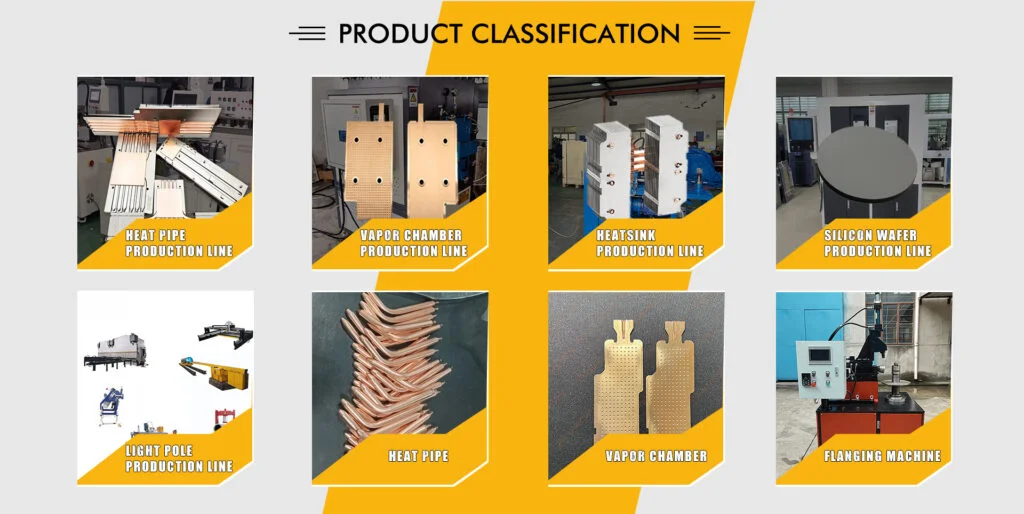
Bangwin Machine is a leading manufacturer of thermal assembly equipment and complete production solution for heat sink,heat pipe, vapor chamber and automatic production line.
👉 Go to thermalmachinery.com for professional manufacturing technologies in the field of thermal выросна.
What Is Heat Sink CNC Machining?
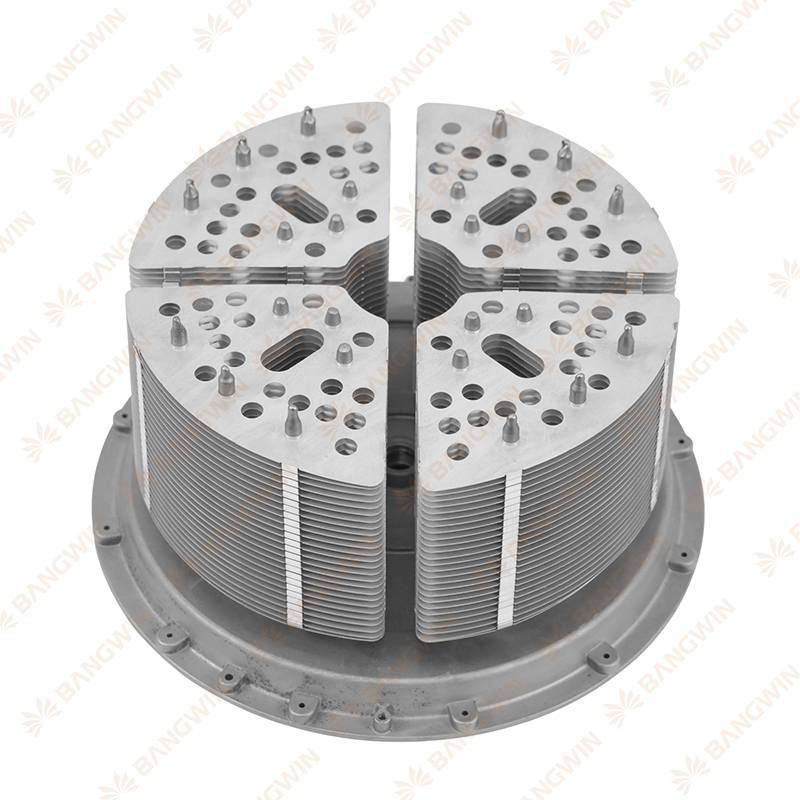
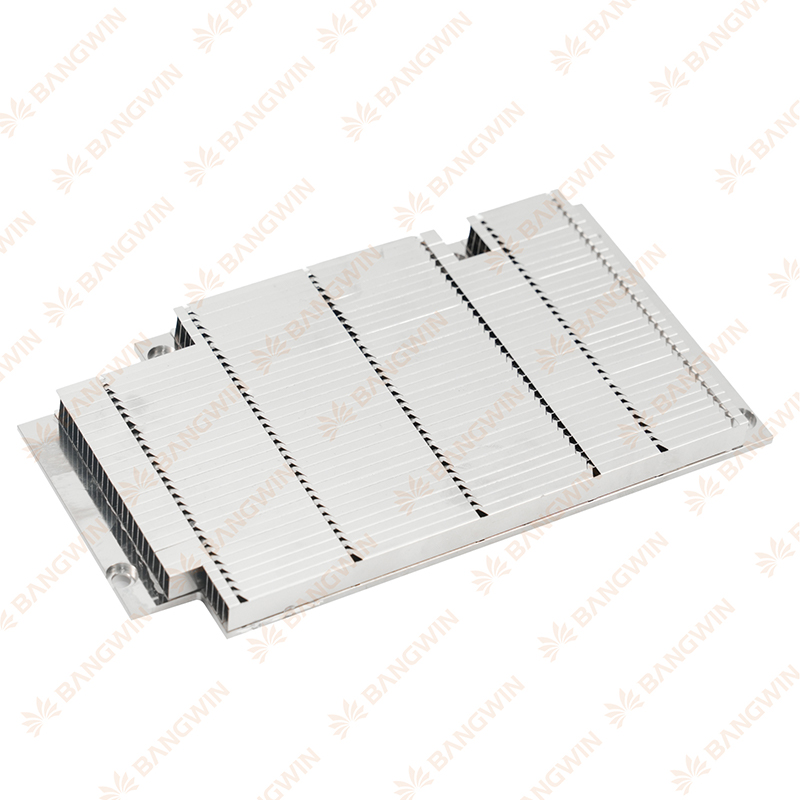
Heat Sink CNC Machining refers to the process of shaping heat sinks utilizing precision computer-controlled machine tools.
It is subtractive process that removes metal from aluminum, copper or other metals.
Next, CNC machines produce fins and mounting holes, slots and paddling guides with extreme precision based on that template.
In contrast to extrusion, CNC machining provides more design flexibility.
As a result, manufacturers can produce complex heat sink structures with no limitations on profiles.
Additionally, CNC machining allows you to make faster prototypes in smaller quantities.
This allows engineers to create tailored thermal solutions in an efficient manner.
Importance of CNC Machining for Heat Sinks
Precision directly affects cooling performance.
Hence, CNC machining is used by the manufacturers to achieve tight tolerances.
Some of the common but crucial advantages of CNC machining are:
- High dimensional accuracy
- Excellent repeatability
- Smooth surface quality
- Flexible product customization
- Fast product development
At the same time, manufacturers are also able to construct intricate geometries that would be difficult to replicate through traditional manufacturing methods.
CNC machining, therefore, supports advanced cooling products for wear and high temperatures — for challenging industries.
Heat Sink CNC Machining Process
Heat Sink CNC Machining comes about through a number of production stages.
Step 1. Material Selection
Manufacturers select suitable raw materials.
Common choices include:
- Aluminum 6063
- Aluminum 6061
- Copper C110
- Copper alloys
Hence, engineers compromise thermally conductive along with strength as well as machining effective.
Step 2. CAD Design
And, engineers develop a 3D model in detail.
Thermal simulation software, on the other hand, analyses thermal performance.
As a result, designers optimize fin spacing and height, airflow channels, and mounting features.
Step 3. CAM Programming
Then, CAM software translates that design into CNC machining directives.
Then, programmers optimize cutting paths.
This results in higher machining efficiency with accuracy preserving.
Step 4. CNC Milling
CNC milling removes excess material.
The machine creates:
- Cooling fins
- Mounting surfaces
- Slots
- Threaded holes
- Precision pockets
Hence, the heat sink is made per stringent specifications.
Step 5. CNC Drilling and Tapping
The machine drills mounting holes.
Then it taps threaded holes where necessary.
Consequently, assembly becomes easier.
Step 6. Deburring
Technicians remove sharp edges.
They also enhance the appearance of the product.
Therefore, installation becomes safer.
Step 7. Surface Treatment
Surface finishing of different kinds has been done by manufacturers to make them more durable.
Common treatments include:
- Black anodizing
- Clear anodizing
- Nickel plating
- Sandblasting
- Powder coating
As a result, it increases both corrosion resistance and appearance.
Step 8. Inspection
Quality engineers verify:
- Dimensions
- Flatness
- Surface finish
- Hole positions
- Thermal performance
So every product satisfies customer requirements.
Manufacturing Process of Heat Sinks Using CNC Machines
Modern cnc equipment is used in production facilities.
- Vertical CNC Machining Centers
Most of heat sink process functions are performed by these machines.
As a result, they are still the most popular option.
- Five-Axis CNC Machines
Five-axis systems produce complex geometries.
As a result, manufacturers develop high-tech cooling items.
- High-Speed CNC Machines
High-speed machining increases production efficiency.
Meanwhile, it improves surface quality.
- Automated CNC Production Cells
Automation improves consistency.
This leads to products being made at significantly lower labor costs while increasing productivity.
CNC Machined Heat Sink Materials
Material selection influences cooling performance.
Aluminum 6063
Advantages include:
- Good thermal conductivity
- Excellent machinability
- Low weight
- Competitive cost
Which is why it still is the industry standard.
Aluminum 6061
This alloy offers:
- Higher strength
- Better structural performance
- Excellent corrosion resistance
As a result, it is applied in industrial space by the manufacturers.
Copper
Copper provides:
- Outstanding thermal conductivity
- Superior heat spreading
- Excellent high-power cooling
But copper eats machining time, and production cost as well.
As a result, engineers only save it for high-end thermal solutions.
Surface Finishing Options
Heat Sink Surface Treatment And How It Improves Performance
Popular finishes include:
- Black anodizing
- Clear anodizing
- Nickel plating
- Electroless nickel
- Powder coating
- Sandblasting
Furthermore, these treatments enhance corrosion resistance and appearance of the product.
Benefits of CNC machining for heat sink
Advantages of Heat Sink CNC Machining
l Exceptional Precision
CNC machines achieve tight tolerances.
Therefore, product quality remains consistent.
l Flexible Design
Engineers create customized geometries easily.
As a result, the products provide advanced cooling solutions.
l Excellent Surface Finish
Precision cutting creates smooth surfaces.
Therefore, thermal interface performance improves.
l Fast Prototyping
Manufacturers develop new products quickly.
This leads to a decrease in the duration of development cycles.
l High Reliability
Computer-controlled machining reduces human error.
Consequently, production quality remains stable.
CNC Machining vs Other Heat Sink Manufacturing Methods
Different manufacturing methods offer different advantages.
Manufacturing Method | Precision | Cost | Design Flexibility | Production Volume |
CNC Machining | Excellent | Medium | Excellent | Medium |
Extrusion | Good | Low | Moderate | High |
Skiving | Excellent | Medium | High | Medium |
Bonded Fin | Excellent | High | Excellent | Medium |
Zipper Fin | Very Good | Medium | High | High |
Uses of CNC Machined Heat Sinks
l AI Servers
Precise Thermals Management of AI Processors
In this sense, CNC milled heatsinks enhance the stability of computing.
l Data Centers
Servers operate continuously.
Consequently, reliable cooling becomes essential.
l Electric Vehicles
Power electronics generate substantial heat.
That is why precision heat sinks are ideal for maximizing system performance.
l Telecommunications
Network equipment requires stable temperatures.
That’s why manufacturers will utilize CNC-machined cooling solutions
l Medical Equipment
Thermal performance is critical from an end-use standpoint for medical electronics.
This is why CNC machining reinforces the high-quality manufacturing process.
l Aerospace
Cooling of Aircraft electronics is one key but demanding part, one of the reasons being aircrafts are required to cool light-weight and reliable cooling.
That is why precision-machined heat sinks are preferred by manufacturers.
Future Trends of CNC Heat Sink Production
The industry is still moving in the same direction, these trends have been mused.
l Artificial Intelligence
The heat density of AI hardware keeps growing.
This is why precision cooling solutions are still a necessary component.
l Smart Manufacturing
Automation improves production quality.
As a result, CNC systems are becoming smarter.
l Hybrid Cooling Technologies
CNC-machined heat sinks are steadily compiled with:
Moreover, production lines integrate:
【Vapor Chamber Production Line】
Naturally this results in a much better thermal performance.
Why Choose Bangwin Machine
Bangwin Machine: Thermal production equipment and turnkey system
Our solutions include:
CNC heat sink manufacturing equipment
- 【Heat Pipe Production Line】
- 【Vapor Chamber Production Line】
- 【Primary Degassing Machine】
- 【Secondary Degassing Machine】
- 【Six-Station Vacuum Degassing Machine】
Moreover, we provide:
- Factory planning
- Equipment customization
- Technical consulting
- Installation support
- Process optimization
- Global after-sales service
As a result, full thermal manufacturing solutions can be obtained from one trusted supplier for the customers.
Check out :https://bangwingascylinder.com/
FAQ
1. What is Heat Sink CNC Machining?
Heat Sink CNC Machining uses computer-controlled equipment to produce precision heat sinks from aluminum, copper, and other metals.
2. Why choose CNC machining for heat sinks?
CNC machining provides excellent accuracy, flexible design, and consistent product quality.
3. Which materials work best?
Aluminum 6063, Aluminum 6061, and copper remain the most common choices.
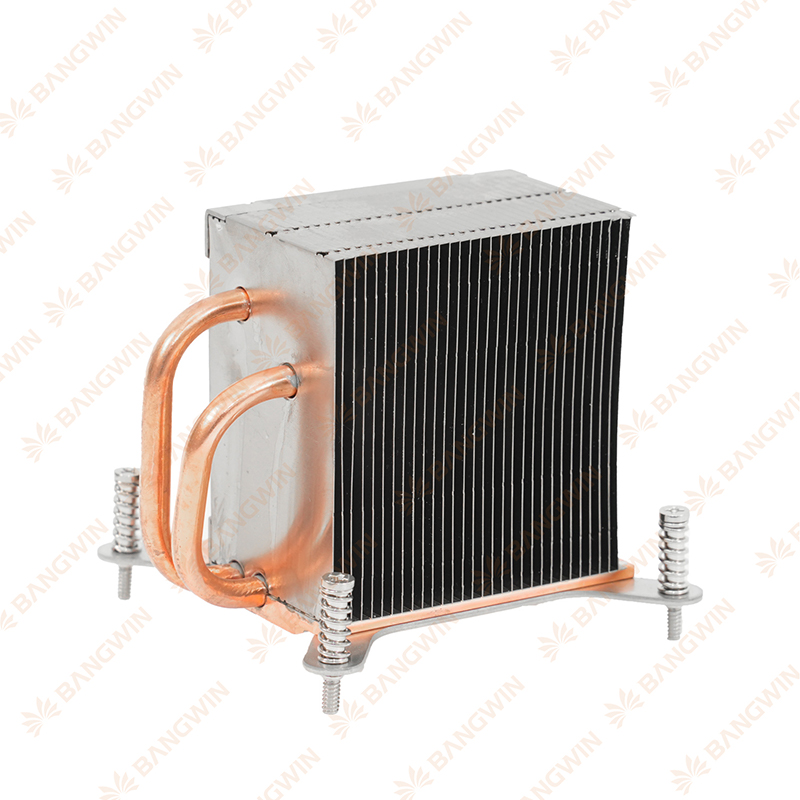
4. Can CNC-machined heat sinks integrate heat pipes?
Yes. Many high-performance cooling systems combine CNC-machined heat sinks with heat pipes or vapor chambers.
5. Which industries use CNC-machined heat sinks?
AI computing, data centers, telecommunications, electric vehicles, aerospace, medical devices, and industrial automation all use CNC-machined heat sinks.
6. Is CNC machining suitable for mass production?
Yes. Automated CNC production cells support medium and high-volume manufacturing while maintaining precision.
Conclusion
There are several benefits to Heat Sink CNC Machining with the most notable being superior precision, design flexibility, and manufacturing consistency.
It lays the groundwork for the cooling technologies that meet even today’s advanced electronic systems requirements.
As a result, makers still adopt CNC machining to premium thermal merchandise.
In addition, a surge in AI computing, cloud infrastructure, electric vehicles and industrial automation will drive the demand for precision-machined heat sinks.
Machine is a provider of high-end CNC manufacturing machines, automatic production lines and complete turnkey solutions for the heat sink, heat pipe and vapor chamber productions.
What Materials Are Used in Extruded Heat Sinks
Another important factor that heavily affects thermal performance is material selection.
- Aluminum 6063
Aluminium 6063 is the most frequently used data for manufacturers.
Moreover, it provides:
- Excellent thermal conductivity
- Lightweight structure
- Good corrosion resistance
- Easy extrusion
- Aluminum 6061
This is the alloy with enhanced mechanical strength.
Hence, it is fit for the most demanding industrial applications.
- Copper Inserts
Some designs integrate copper components.
This leads to even more heat transfer enhancement.
Advantages of Extruded Heat Sinks
Advantages of an Extruded Heat Sink
- Cost-Effective Manufacturing
Extrusion supports high-volume production.
Therefore, production costs remain low.
- Excellent Thermal Performance
The large fin areas will aid in dissipating heat.
Consequently, cooling efficiency increases.
- Lightweight Design
Aluminum weighs less than copper.
Hence, manufacturers lower the weight of products.
- Flexible Customization
Manufacturers create different profiles easily.
Consequently they cater to specific customer needs.
- Scalability
Extrusion supports mass production.
That is why, manufacturers manage the escalating demand
Extruded Heat Sink vs Other Heat Sink Types
Different cooling technologies offer different advantages.
Type | Cost | Performance | Complexity |
Extruded Heat Sink | Low | Good | Low |
Skived Fin Heat Sink | Medium | High | Medium |
Bonded Fin Heat Sink | High | Very High | High |
Heat Pipe Heat Sink | High | Excellent | High |
Vapor Chamber Heat Sink | Very High | Excellent | High |
Therefore, extruded heat sinks remain the preferred option for many standard applications.
Meanwhile, advanced cooling systems often combine:
These technologies support higher thermal loads.
Applications of Extruded Heat Sinks
Extruded heat sinks are used by some manufacturers in:
- Desktop computers
- Gaming consoles
- LED lighting
- Power supplies
- AI Servers
AI workloads create lots of heat.
Therefore, efficient cooling remains essential.
- Data Centers
You cannot use just any kind of thermal management suited to the server racks.
This is the reason that extruded heat sinks keep more stability for operation.
- Electric Vehicles
The cooling of battery systems and power electronics is critical.
Hence, heat tunnel designs are increasingly used in EV manufacturing.
- Telecommunications
Communication equipment operates continuously.
This necessitates managing heat very well.
- Industrial Automation
Long term reliability of industrial power modules
So it comes in handy the extruded heatsinks.
Design of Extruded Heat Sinks
Engineers must consider several factors.
- Fin Geometry
Fin spacing influences airflow performance.
So, Design, in turn, increase the effectiveness o heat exchange.
- Material Selection
Different alloys provide different characteristics.
In turn, it affects the choice of materials by engineers as per requirement.
- Airflow Direction
Airflow strongly affects thermal performance.
As such, fin orientation is an important consideration for designers.
- Mounting Method
Secure installation improves heat transfer.
Therefore, Thermal Resistance decreases.
- Environmental Conditions
Engineers considered heat, humidity and dust exposure.
Hence, the heat sink works well at working environment.
On other side, these growth of extruded heat sink technology and its future
The market is shaped by various trends continuingly.
- Artificial Intelligence Growth
The coolers in AI hardware are getting bigger and bigger.
And so integrated heat sink designs keep progressing.
- High-Density Computing
Data Centre require higher thermal Efficiency.
This explains why hybrid cooling solutions are becoming more popular.
- Electric Vehicle Expansion
Globally, the adoption of electric vehicles (EV) continues to grow.
This is why thermal management technologies are a big area of investment for manufacturers.
- Smart Manufacturing
Automation improves production efficiency.
Due to that, heat sink quality and consistency are still being improved.
Recommended External Resource
For Industrial gas cylinders and other manufacturing items, please go:
Why Choose Bangwin Machine
Bangwin Machine is a manufacturer of thermal cost-effective manufacturing equipment and turnkey production solutions.
We provide:
Heat sink production equipment
【Vapor Chamber Production Line】
【Six-Station Vacuum Degassing Machine】
Moreover, we offer:
- Factory planning
- Equipment customization
- Technical training
- Installation support
- Process optimization
This means that customers can source complete manufacturing solutions from a single supplier.
👉 More details>> https://thermalmachinery.com/
FAQ
- An extruded heat sink defined.
An Extruded Heat Sink is a kind of cooling component made using the aluminum extrusion process.
- Why Extruded Heat Sinks Are Preferred By Manufacturers?
High thermal performance, low price & simple customization are the key features they provide.
- Also read: Which materials are suitable for extruded heat sinks?
Aluminium 6063 is still the most used type as it gives a good compromise between performance vs price.
- Are extruded heat sinks compatible with heat pipes?
Yes. One approach that a lot of higher-end designs implement is with heat pipes.
- Possible bad news: Extruded heat sinks may not cut it for AI servers
Yes. They are most effective cooling solutions for several AI and data center applications.
- Answer : Applications of Extruded Heat Sinks.
They are widely used in electronics, telecommunications, EVs, industrial automation and data centers.
Conclusion
The Extruded Heat Sink is arguably one of the most cost effective and efficient means of cooling today.
It has great thermal characteristics, is light weight and can be manufactured at scale.
Hence, extruded heat sinks are still employed by manufacturers across diverse sectors.
Platini added that future expansion of AI computing, EV technology and data centers will need even more than the second boost.
Bangwin Machine offers leading-edge thermal manufacturing equipment and turnkey production solutions for customers around the world.
👉Go to: thermalmachinery.com and learn more about advanced thermal management technologies and manufacturing systems.
