Introduction
Modern electronics systems are generating more and more power.
Thus, efficient thermal management is crucial for performance and reliability.
Applications such as:
- High-performance GPUs
- AI servers
- Data centers
- Electric vehicles
- Industrial electronics
require advanced cooling technologies.
Two popular thermal solutions include:
- Vapor chambers
- Liquid cooling systems
Both technologies remove heat effectively.
But each utilizes a totally different form of cooling.
Comparison of Liquid Cooling and a Vapor Chamber to help engineers decide the right thermal solution
A vapor chamber employs phase change in a sealed environment.
On the other hand, with liquid cooling you have circulating coolant that carries heat away.
Thus, every solution has its pros and cons.
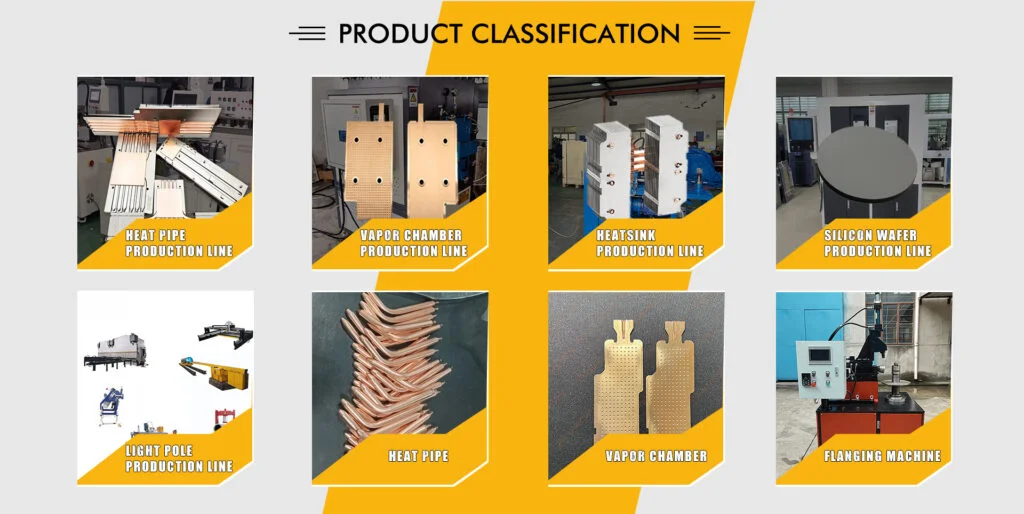
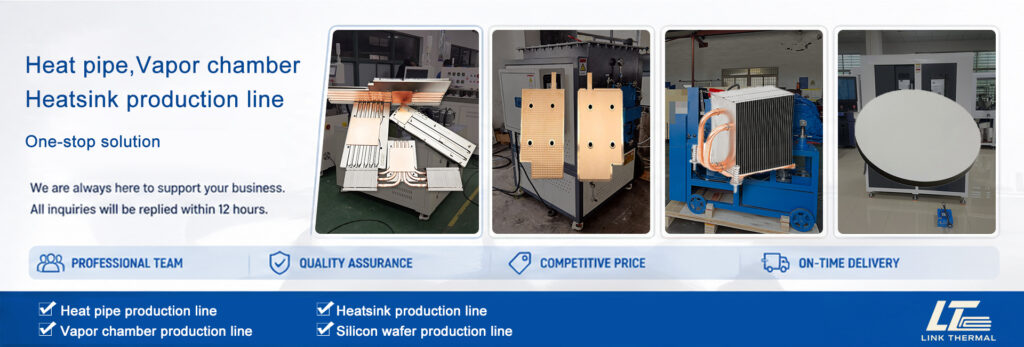
Bangwin Machine is thermal manufacturing equipment company, focused on producing vapor chamber production line, heat pipe equipment and vacuum processing machine as well as customized heat solutions.
👉 Discover more advanced thermal manufacturing technologies at https://thermalmachinery.com/
What Is a Vapor Chamber?
Vapor chamber is a flat heat transfer element
The heat is dispersed using phase change technology.
The structure usually includes:
- Copper cover plates
- Wick structure
- Working fluid
- Vacuum environment
Heat Transfer in Evaporate Area:
- The working fluid absorbs heat.
- The fluid evaporates.
- Vapor moves to cooler areas.
- Vapor condenses.
- Liquid returns through the wick.
Hence, vapor chambers deliver a quick spread of heat.
【Vapor Chamber Production Line】
What Is Liquid Cooling?
Liquid cooling is the use of a liquid coolant to absorb and transfer heat away from electronic components.
The system usually includes:
- Cold plate
- Pump
- Tubing
- Radiator
- Cooling fluid
The coolant takes heat away from the components.
After that the pump transfers the heated liquid to your radiator.
Finally, the radiator releases heat.
So liquid cooling can have very high heat loads.
Vapor Chamber vs Liquid Cooling Working Principle
Vapor Chamber Working Principle
A vapor chamber relies on phase change
It operates by fluctuating the working fluid from liquid to vapor states.
So therefore heat from evaporation and condensation.
Advantages include:
- Passive operation
- No moving parts
- Compact structure
【Vapor Chamber Working Principle】
Liquid Cooling Working Principle
Liquid cooling uses forced circulation.
A pump circulates coolant within the system.
Heat, therefore, is transferred through the movement of fluid.
Advantages include:
- High cooling capacity
- Flexible system design
Vapor Chamber vs Liquid Cooling Performance Comparison
Feature | Vapor Chamber | Liquid Cooling |
Cooling Method | Phase change | Liquid circulation |
Moving Parts | No | Yes |
Maintenance | Low | Higher |
Noise Level | Silent | Pump noise possible |
Heat Capacity | High | Very high |
Size | Compact | Larger system |
Reliability | Very high | Depends on components |
Cost | Moderate | Higher |
Vapor Chamber Advantages
A vapor chamber is not without its advantages.
Compact Design
The modern-day devices need slim thickness cooling solutions.
And as a consequence, vapor chambers are designed to partially accommodate cramped spaces.
Applications include:
- Smartphones
- Laptops
- GPUs
- Thin servers
Passive Operation
There are no pumps with vapor chambers.
Therefore, they operate silently.
High Reliability
It also has a sealed design, minimizing points of failure.
Therefore, service life improves.
Excellent Heat Spreading
Vapor chambers spread heat over larger surfaces.
Consequently, hotspot temperatures decrease.
Low Maintenance
No coolant replacement is required.
Therefore, operating costs remain low.
Liquid Cooling Advantages
Liquid cooling also offers some distinct benefits.
Extremely High Cooling Capacity
Liquid systems can deal with significant heat extraction.
Therefore, they suit high-power applications.
Flexible Installation
Engineers have the flexibility to build their own bespoke loops.
Thus, the system is well suited for liquid cooling of complex systems.
Suitable for Extreme Heat Loads
Applications include:
- Supercomputers
- AI clusters
- High-performance computing
Vapor chamber for GPU cooling vs Liquid Cooling
GPU cooling is one of the more typical comparisons.
Top-end GPUs are capable of generating very large power/thermal loads.
This means that the cooling technology itself has a direct influence on performance.
Vapor Chamber GPU Cooling
Numerous graphics cards (because vapour chambers) use aqueous.
Advantages include:
- Compact size
- Low maintenance
- Quiet operation
- High reliability
Vapor Chamber for GPU Cooling
Liquid Cooling GPU Systems
Liquid cooling has higher thermal capacity.
Advantages include:
- Lower temperatures under extreme loads
- Overclocking capability
However, systems require:
- Pumps
- Tubes
- Maintenance
Which Is Better for GPUs?
For most consumer GPUs:
This is where vapor chambers do quite well.
Since your reading this, extreme performance systems may utilize liquid cooling.
So the answer will depend on thermal needs.
Vapor Chamber vs Liquid Cooling for Data Center
Thermal management of data centers.
Gotta be 1000sq in size per thin server strip, and AI servers create very high heat density.
Thus, the cooling technology is gradually becoming essential.
Vapor Chamber Data Center Cooling
Advantages:
- Compact design
- High reliability
- Low maintenance
【Vapor Chamber for Data Center Cooling】
Liquid Cooling Data Center Systems
Advantages:
- Handles extreme workloads
- Supports direct-to-chip cooling
Liquid systems, on the other hand, need more infrastructure.
They need:
- Pumps
- Coolant management
- Maintenance systems
Liquid cooling with vapor chamber in an EV application
Good thermal control is the prerequisite for electric vehicles.
Heat generation in battery systems and power electronics.
Vapor Chamber EV Cooling
Advantages:
- Lightweight design
- Compact structure
- Passive operation
- Related keyword:
【Electric Vehicle Vapor Chamber】
Liquid Cooling EV Systems
Battery packs use liquid cooling in abundance.
Advantages include:
- Uniform temperature control
- High cooling capability
That is why a lot of EV companies use both technologies together.
Comparison of Costs between Vapor Chamber and Liquid Cooling
Cost depends on system design.
Vapor Chamber Cost Factors
Main costs include:
- Copper materials
- Manufacturing equipment
- Production process
However, maintenance costs remain low.
Liquid Cooling Cost Factors
Liquid cooling requires:
- Pumps
- Radiators
- Coolant
- Control systems
As a result, they tend to be more costly to install.
Reliability Comparison
First of all, it is reliable in Applications.
Vapor Chamber Reliability
Vapor chambers have:
- No pump
- No moving parts
- Sealed structure
Therefore, failure risks remain low.
Liquid Cooling Reliability
Liquid systems rely on various elements.
Potential issues include:
- Pump failure
- Leakage
- Coolant degradation
Therefore, maintenance becomes important.
Liquid Cooling vs Vapor Chamber: How to Select?
Only application requirements would help you decide which one is actually the right.
Choose Vapor Chamber When:
You need:
- Compact design
- Silent operation
- High reliability
- Low maintenance
Choose Liquid Cooling When:
You need:
- Maximum cooling capacity
- Extreme heat removal
- Large-scale thermal management
Consider Hybrid Cooling Solutions
Some advanced systems combine:
- Vapor chambers
- Liquid cooling
Therefore, engineers achieve higher performance.
Bangwin Machine Thermal Manufacturing Solutions
Bangwin Machine specializes in providing professional thermal component equipment.
Our solutions include:
- Vapor chamber production lines
- Vapor chamber machines
- Vacuum processing equipment
- Heat pipe production equipment
- Heat sink manufacturing systems
We support customers with:
- Equipment customization
- Production line design
- Manufacturing optimization
- Technical support
【Vapor Chamber Vacuum Machine】
👉 Click here to know more https://bangwingascylinder.com/
FAQ
- Is a vapor chamber better than liquid cooling?
A vapor chamber provides excellent reliability and compact design, while liquid cooling provides higher maximum cooling capacity.
- Do vapor chambers use liquid?
Yes. Vapor chambers contain working fluid that changes between liquid and vapor states.
- Does liquid cooling require maintenance?
Yes. Liquid cooling systems require monitoring of pumps, coolant, and possible leakage.
- Which cooling solution is better for GPUs?
Vapor chambers suit most GPUs, while liquid cooling suits extreme performance systems.
- Can vapor chambers replace liquid cooling?
For many applications, vapor chambers can replace liquid cooling. However, extremely high-power systems may still require liquid cooling.
- Does Bangwin Machine manufacture vapor chamber equipment?
Yes. Bangwin Machine provides vapor chamber production lines and thermal manufacturing equipment.
Conclusion
Both Vapor Chamber and Liquid Cooling are effective thermal solutions as seen in the above comparison.
Vapor chambers offer:
- Compact structure
- High reliability
- Low maintenance
Liquid cooling offers:
- Maximum cooling capacity
- Flexible thermal design
So engineers must decide on the solution based on heat loads, constraints in space, budgets and reliability targets.
Due to these various applications, the demand for vapor chamber manufacturing continues to grow over time with AI, GPUs, data centers, and electric vehicles driving up demand.
Bangwin Machine specializes in vapor chamber production equipment and advanced thermal manufacturing solutions for global customers.
👉 Check out https://thermalmachinery.com/ to discover professional production thermal technology.