Introduction
Electronics continue to grow smaller with more power.
That is why now more than ever thermal management comes into play.
Components such as:
- CPUs
- GPUs
- Power modules
- LED systems
- Industrial controllers
generate significant heat during operation.
A heat sink assists in this process by dispersing heat through effective heat dissipation.
Out of all the different manufacturing technologies, Heat Sink Extrusion is still one of the majorly used packaging methods.
How does it work, though? Well, aluminum heat sinks of:
- Integrated fins
- Lightweight structures
- High production efficiency
- Stable thermal performance
Hence, it enables mass production of heat sink through extrusion technology.
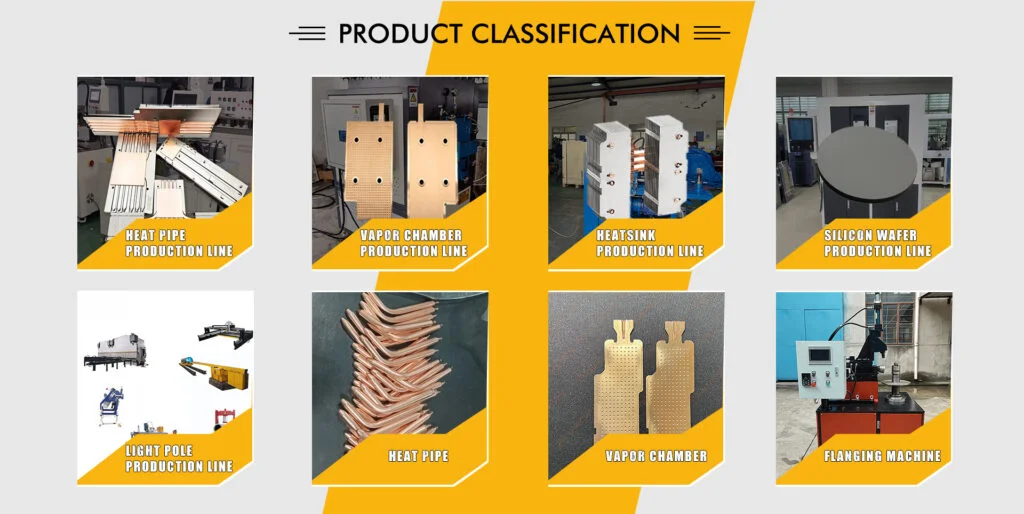
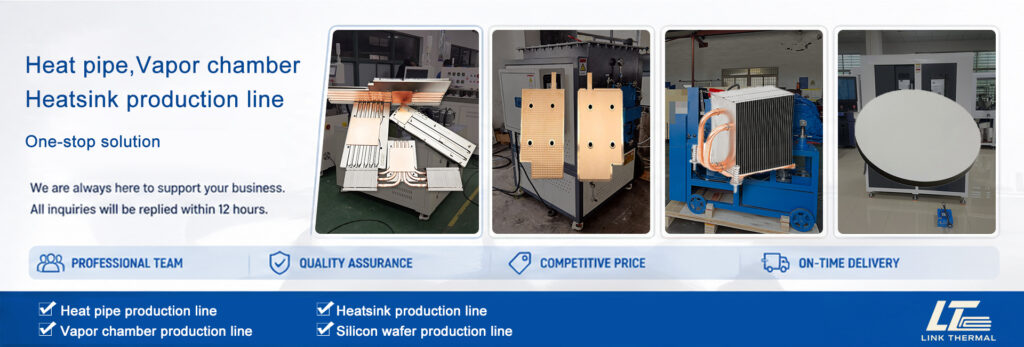
Bangwin Machine Bangwin supplies professional thermal manufacturing equipment such as the heat sink production system,heat pipe equipment,vapor chamber machine and custom thermal solutions.
👉 Go to thermalmachinery.com for the latest advancements in thermal manufacturing technology.
What Is Heat Sink Extrusion?
Heat Sink Extrusion is a metal shaping manufacturing process by creating heat sink profiles through heating the metal and pushing it through an appropriate shaped die.
The extrusion process forms:
- Base plates
- Cooling fins
- Mounting structures
- Complex thermal profiles
Aluminum is the most commonly used material for extruded heat sinks.
Aluminum provides:
- Good thermal conductivity
- Lightweight characteristics
- Excellent processing performance
This is the reason why aluminum extrusion has so often been utilized to manufacture heat sinks.
The extruded profile may then undergo further processing, including:
- Cutting
- CNC machining
- Surface treatment
- Assembly

What Is Heat Sink Extrusion Process, How Does It Work?
Extrusion uses pressure application and temperature control.
It contains several stages as a simple principle.
Step 1: Aluminum Billet Preparation
Aluminium billets are prepared by the manufacturers prior to extrusion.
The billet size depends on:
- Heat sink dimensions
- Production requirements
- Extrusion equipment capacity
So, the well-prepared material increases the production stability.
Step 2: Heating Process
We heat the aluminum billet to a certain temperature.
Heating makes it easier to contort the aluminum.
Consequently, the material flows smoothly through the extrusion die.
Step 3: Die Extrusion
The aluminum is pressed through the custom die using an extrusion press.
It is the die that determines what the heat sink will look like when finished.
Consequently, manufacturers can construct different fin structures.
Step 4: Cooling and Straightening
Affordable Precision Aluminum Extrusion Process and Factors After extrusion, the profile needs to cool down.
After that, the manufacturers correct the aluminum profile.
This process improves dimensional accuracy.
Step 5: Cutting and Finishing
Manufacturers then tract profiles into desired sizes.
Additional processes include:
- CNC machining
- Drilling
- Surface treatment
- Assembly
So, extrusion is integrated within a complete heat sink manufacturing process.
【Heat Sink Manufacturing Process】
Benefits of Using Extrusion in Heat Sink Manufacturing
Benefits of Heat Sink Extrusion
4.1 High Production Efficiency
Extrusion supports continuous manufacturing.
So manufacturers are able make a huge number in no time.
This gives the edge to extrusion and hence it works when:
- Consumer electronics
- Industrial equipment
- LED lighting
4.2 Flexible Design Capability
These dies are used for extruding different profiles.
Manufacturers can customize:
- Fin height
- Fin thickness
- Base thickness
- Mounting structures
Such that engineers may optimize the thermal behavior.
4.3 Lower Manufacturing Cost
Compared with composite machining methods, extrusion reduces the amount of processing steps.
Therefore, production costs become lower.
4.4 Excellent Structural Strength
They have a very good integrated structure. Complete the formation of the extruded heat sink.
These fins and base are a single continuous aluminum profile.
Therefore, thermal resistance decreases.
4.5 Lightweight Design
Lightweight heat sinks made from aluminium extrusions
Hence, it is also appropriate for applications limited by weight.
Heat Sink Extrusion Material
Extrusion Aluminum has always been used as a major extrusion material.
Common aluminum alloys include:
Aluminum 6063
Using aluminum 6063 with heat sink extrusion
Advantages include:
- Good extrusion performance
- Good surface quality
- Good corrosion resistance
Thus it is suitable for general heat application.
Aluminum 6061
Aluminum 6061 offers better mechanical strength.
Hence it is suitable for applications where a more robust structure is required.
Copper Extrusion
Copper provides better thermal conductivity.
However, copper extrusion requires:
- Higher processing temperatures
- More complex equipment
- Higher manufacturing costs
Therefore, aluminum remains more common.
Heat Sink Extrusion Process
One complete process of Heat Sink Extrusion consists of multiple manufacturing stages.
6.1 Die Design
The die defines the heat sink profile.
Engineers consider:
- Thermal requirements
- Airflow conditions
- Mechanical structure
Thus, die design has a direct impact on performance.
6.2 Extrusion
The aluminum profile is developed by means of the extrusion press.
The machine controls:
- Pressure
- Temperature
- Extrusion speed
Therefore, production quality remains stable.
6.3 Cutting
Cut: Long profiles are cut into required lengths by the manufacturers.
Therefore, products match customer requirements.
6.4 CNC Machining
CNC machining creates precision features.
Examples include:
- Screw holes
- Mounting slots
- Contact surfaces

6.5 Surface Treatment
Common treatments include:
- Anodizing
- Powder coating
- Cleaning
As a result, it enhances both surface quality and durability.
6.6 Assembly
There are heat sinks that come with some additional basics.
Manufacturers may install:
- Heat pipes
- Fans
- Clips
- Thermal pads

Types of Extruded Heat Sink Designs
There are various foregoing structures for each application in extrusion.
Standard Fin Heat Sink
This design uses straight fins.
Advantages:
- Simple structure
- Low manufacturing cost
- Easy production
Hence, it is ideal for general refrigeration purposes.
High-Density Fin Heat Sink
This design uses narrow fins.
Advantages:
- Larger surface area
- Better heat dissipation
Therefore, it suits high-performance electronics.
Star Fin Heat Sink
Star-shaped fins improve airflow distribution.
Which therefore offers a very effective cooling in small area.
Extruded Heat Sink with Embedded Heat Pipe
It is the concept of combined extrusion plus heat pipes.
Heat pipes abstract heat rapidly.
Therefore, cooling performance improves.
Advantages of Extruded Heat Sinks
The advantages of extruded heat sinks
Cost Efficiency
Extrusion reduces material waste.
Therefore, manufacturers achieve competitive pricing.
Stable Quality
Dimensions are consistent because of the extrusion process.
Therefore, large-scale production becomes easier.
Customization
Manufacturers can design custom profiles.
Therefore, extrusion supports different applications.
Good Thermal Performance
The internal fin structure enhances heat transfer.
This is why extruded heat sinks are still popular.
Heat Sink Extrusion and Other Manufacturing Methods
Each method of manufacturing has its benefits.
Manufacturing Method | Advantages | Applications |
Extrusion | Low cost, high volume | General heat sinks |
CNC Machining | High precision | Custom designs |
Skiving | High fin density | Compact cooling |
Bonded Fin | Flexible design | Large cooling systems |
Die Casting | Complex shapes | Mass production |
Heat Sink Extrusion Vs CNC Machining
Extrusion provides better production efficiency.
But CNC machining offers greater design freedom.
Therefore:
- Use extrusion for standard profiles.
- Use CNC for customized structures.
Heat Sink Extrusion vs Skived Fin
The Skived fin technology designs thinner fins.
Thus, it offers increased fin density.
Although extrusion is cheaper for large-scale manufacturing.
Heat Sink Extrusion Applications
Various industries like mobile communications, automotive, and essentially any electronic or electrical appliance rely on heat sink extrusion.
Computer Cooling
You know well that both processors and graphics cards need cooling.
This means that the intentions of people to keep them cool are helped with extruded heat sinks.
LED Lighting
LED systems generate continuous heat.
Thus, aluminum extrusion acts as a thermal solution that one can rely on.
Power Electronics
Power modules rely on good heat removal.
So, the extruded heat sinks support industrial applications.
Automotive Electronics
Reload the feed Electric cars are full of electronics.
Thus lightweight thermal solutions is vital.
Industrial Control Systems
Industrial equipment requires long-term reliability.
In this way, extruded heat sinks preserve the ideal operational state.
Heat Sink Extrusion Equipment
There are multiple components in a professional heat sink extrusion system.
Extrusion Press
An extrusion press supports the forming pressure.
Therefore, it determines production capability.
Custom Extrusion Die
It makes the heat sink profile by a die.
Hence the final performance is influenced from die quality.
Cooling System
Profile temperature is controlled by the cooling system.
Therefore, dimensional accuracy improves.
Cutting Equipment
Cutting machines to produce the required lengths of the products.
CNC Processing Equipment
CNC machines complete secondary processing.
Related equipment:
【Heat Sink Manufacturing Line】
Guide to selecting a heat sink extrusion solution
Manufacturers should consider several factors.
Thermal Requirements
First, evaluate:
- Heat load
- Operating temperature
- Cooling environment
So, engineers can choose appropriate design.
Profile Design
Consider:
- Fin height
- Fin spacing
- Base thickness
Hence, the thermal demands is included during designing.
Production Volume
High-volume projects benefit from extrusion.
Therefore, extrusion reduces manufacturing costs.
Supplier Experience
Choose suppliers with:
- Engineering capability
- Manufacturing experience
- Equipment knowledge
Therefore, production risks decrease.
Bangwin Machine Thermal Manufacturing Solutions
Bangwin Machine Supply professional thermal manufacturing equipment.
Our solutions include:
- Heat sink production systems
- Heat sink assembly machines
- Heat pipe manufacturing equipment
- Vapor chamber production lines
We support customers with:
- Equipment customization
- Production line design
- Manufacturing optimization
- Technical support
As such, thermal generation solutions are offered to the customer completely.
👉 Check out
Home
FAQ
- What is heat sink extrusion?
Heat sink extrusion is a manufacturing process that forms aluminum profiles with cooling fins through a custom extrusion die.
- Why is aluminum used for heat sink extrusion?
Aluminum provides good thermal conductivity, lightweight properties, and excellent extrusion performance.
- Is extruded heat sink suitable for high-power electronics?
Yes. Extruded heat sinks support many high-power applications when designed correctly.
- What is the difference between extrusion and CNC machining?
Extrusion suits high-volume production, while CNC machining suits complex customized designs.
- Can Bangwin Machine provide heat sink extrusion equipment?
Yes. Bangwin Machine provides customized thermal manufacturing equipment and complete heat sink production solutions.
Conclusion
To sum up, heat sink extrusion is still one of the most economical solutions for manufacturing aluminum heat sinks.
The process provides:
- High production efficiency
- Flexible designs
- Stable quality
- Competitive costs
Thus, extrusion technology stands by thermal solutions in electronics, automotive, industrial and energy industries.
As the demand for premmuim cooling system continue to augment, professional heatsink manufacturing equipment is of paramount importance.
Bangwin Machine one Stop Thermal Manufacturing Solution for Global Custom
👉 Thermalmachinery.com for professional technologies and production to heat sink.