
Introduction
The thermal density of modern electronic devices is still on the rise. As a result, it is necessary to have reliable cooling solutions in order to maintain performance and stability.
Phase change technology provides a great heat spreading capability through vapor chambers.
Yet, producing a competent vapor chamber is an exacting process.
Vapor Chamber Testing Process ensures that every product meets the thermal performance and reliability requirements.
During production, manufacturers test:
- Structural integrity
- Vacuum performance
- Leakage resistance
- Thermal conductivity
- Heat spreading capability
Thus, testing is the key to vapor chamber production.
Bangwin Machine provides advanced thermal manufacturing equipment, including vapor chamber production lines, testing systems, vacuum equipment, and customized thermal production solutions.
👉 Go to https://thermalmachinery.com/ to discover skilled heating works process.
What Is Vapor Chamber Testing?
Vapor Chamber Testing Process:Conforms to the quality and performance of vapor chambers after manufacturing.
A vapor chamber relies on:
- Working fluid circulation
- Vacuum environment
- Wick structure
- Copper shell integrity
Hence, even a manufacturing defect can lead to the decrease in cooling performance.
Testing verifies that the vapor chamber can:
- Transfer heat efficiently
- Maintain internal vacuum
- Prevent fluid leakage
- Operate under designed conditions
The whole testing process generally consists of:
- Visual inspection
- Dimension measurement
- Leakage testing
- Vacuum testing
- Thermal performance testing
- Reliability evaluation
Why you should test on vapor chamber
Testing directly affects product quality.
Having a Professional Vapor Chamber Testing Process has many benefits.
Ensures Thermal Performance
Heat must be transferred quickly by a vapor chamber.
Thus, manufacturers check thermal resistance and temperature distribution.
Detects Manufacturing Defects
Testing identifies problems such as:
- Poor sealing
- Internal contamination
- Insufficient vacuum
- Wick structure defects
So, the quality of production can be enhanced by manufacturers.
Improves Product Reliability
Long operation time is needed for electronic devices.
This means that reliable vapor chambers ensure high system reliability.
Supports Mass Production
Automated testing improves production consistency.
Consequently, manufacturers achieve stable output.
Vapor Chamber Testing Overview
A Vapor Chamber Testing Process consists of multiple inspection stages.
Step 1: Appearance Inspection
The first procedure inspects the external state.
Manufacturers inspect:
- Surface scratches
- Deformation
- Welding marks
- Contamination
Thus, the appearance inspection guarantees the quality of all products.
Step 2: Dimension Measurement
Manufacturers measure:
- Length
- Width
- Thickness
- Flatness
Precise dimensions ensure proper installation.
And so, dimensional testing checks for assembly problems.
Common measuring tools include:
- Digital calipers
- Micrometers
- 3D measurement systems
Step 3: Leakage Testing
Leakage testing checks sealing performance.
Vapor chambers need an entirely closed design.
Therefore, manufacturers test for:
- Air leakage
- Fluid leakage
- Seal defects
Common methods include:
Helium Leakage Testing
Helium testing provides high sensitivity.
So, It is able to identify tiny leakage spots.
Pressure Decay Testing
Manufacturers monitor pressure changes.
Consequently, they identify sealing problems.
Step 4: Vacuum Testing
Vapor chamber performance is influenced by the vacuum environment inside.
Therefore, manufacturers test:
- Internal pressure
- Vacuum stability
- Gas residue
A bad vacuum is the natural enemy of high-vacuum-based heat transfer efficiency.
Related equipment:
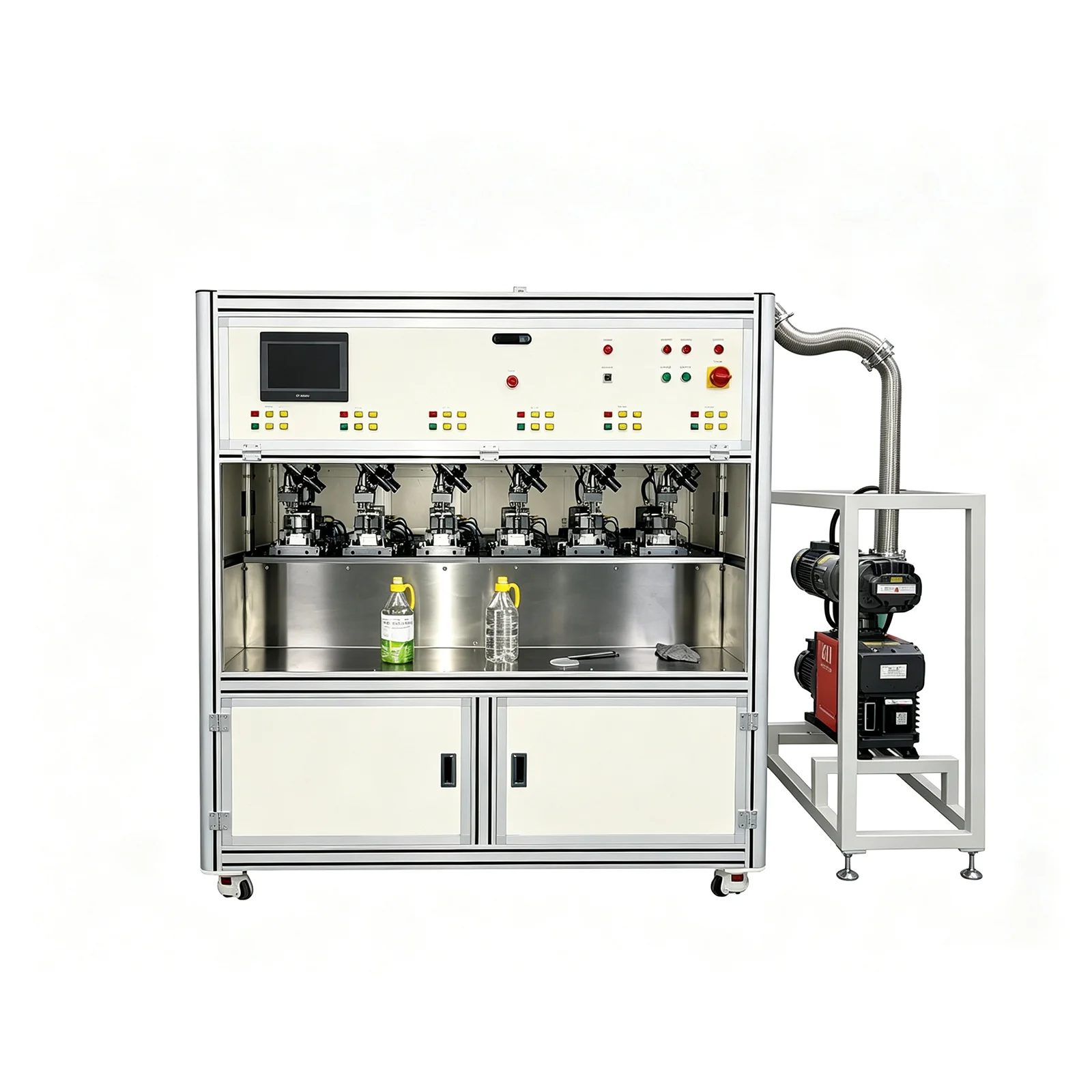
【Six-Station Vacuum Degassing Machine】
Step 5: Thermal Performance Testing
Thermal-testing is the most critical étape
Manufacturers evaluate:
- Thermal resistance
- Temperature difference
- Heat transfer capacity
The test usually includes:
- Heating the area of evaporation.
- Measuring temperature changes.
- Recording cooling performance.
- Comparing results with specifications.
Thus, the actual cooling capacity is confirmed by manufacturers.
Step 6: Heat Spreading Performance Test
Using a vapour chamber essentially aids the heat spreader.
Manufacturers therefore assess heat spreading performance.
Testing methods include:
- Infrared thermal imaging
- Temperature mapping
- Thermal camera analysis
These methods show:
- Hotspot reduction
- Temperature uniformity
- Heat distribution efficiency
Vapor Chamber Appearance Inspection
Visual Inspect helps us decide the quality in a lesser time.
Manufacturers check:
Surface Quality
Keep the copper surface clean.
Thus, manufacturers eliminate flaws before shipping.
Welding Quality
Poor welding may cause leakage.
As a result, inspection is used to seal areas.
Flatness
For this reason flat surfaces make better contact with the heat sources.
Therefore, flatness affects thermal performance.
Vapor Chamber Leakage Testing
The vapor chamber contains vacuum environments, so it is extremely important to do some leakage tests.
Over time, a leaking chamber will end up with losses.
Therefore, manufacturers perform strict testing.
Common leakage testing methods include:
Helium Mass Spectrometer Test
This method provides high accuracy.
Therefore, it suits high-performance applications.
Vacuum Holding Test
Manufacturers maintain vacuum conditions.
Then, they monitor pressure changes.
Therefore, they confirm sealing reliability.
Vapor Chamber Vacuum Testing
Vacuum environment is the control of phase change efficiency.
So Vacuum Testing assess conditions on the inside.
Important parameters include:
- Vacuum level
- Gas content
- Pressure stability
Related process:
【Vapor Chamber Vacuum Process】
Thermal Performance Testing
Thermal Testing — This is usually the better measure of actual cooling performance.
Important indicators include:
Thermal Resistance
Performance improves with lower thermal resistance.
Manufacturers therefore compare results against design targets.
Temperature Distribution
We are essentially the thermal imaging of cameras transmitting heat diffusion behaviour when observed.
Therefore, engineers identify hotspots.
Maximum Heat Transfer Capacity
Highest Heat Load: This is for manufacturers to test.
Consequently, they determine operating limits.
Heat Spreading Performance Testing
Heat spreading is a key benefit of vapor chambers.
Manufacturers use:
Infrared Thermal Imaging
Thermal cameras display temperature differences.
Therefore, engineers analyze heat distribution.
Heating Platform Testing
Real applications simulated with a controlled heat source.
Therefore, manufacturers evaluate practical performance.
Cooling Curve Analysis
Engineers takes record over time temperature of air measured.
Consequently, they understand cooling behavior.
Reliability Testing Methods
During this process, vapor chambers need to behave differently.
Therefore, manufacturers perform reliability tests.
Thermal Cycling Test
A product undergoes a series of cycles comprised of heating and cooling.
Therefore, manufacturers evaluate structural stability.
High Temperature Test
Manufacturers check the performance at (,not manufactured) high temp.
Consequently, they confirm material durability.
Long-Term Operation Test
Products operate continuously.
Therefore, manufacturers verify service life.
Vapor Chamber Production Test Equipment
Advanced testing equipment is needed to manufacture vapor chambers in a professional manner.
Important equipment includes:
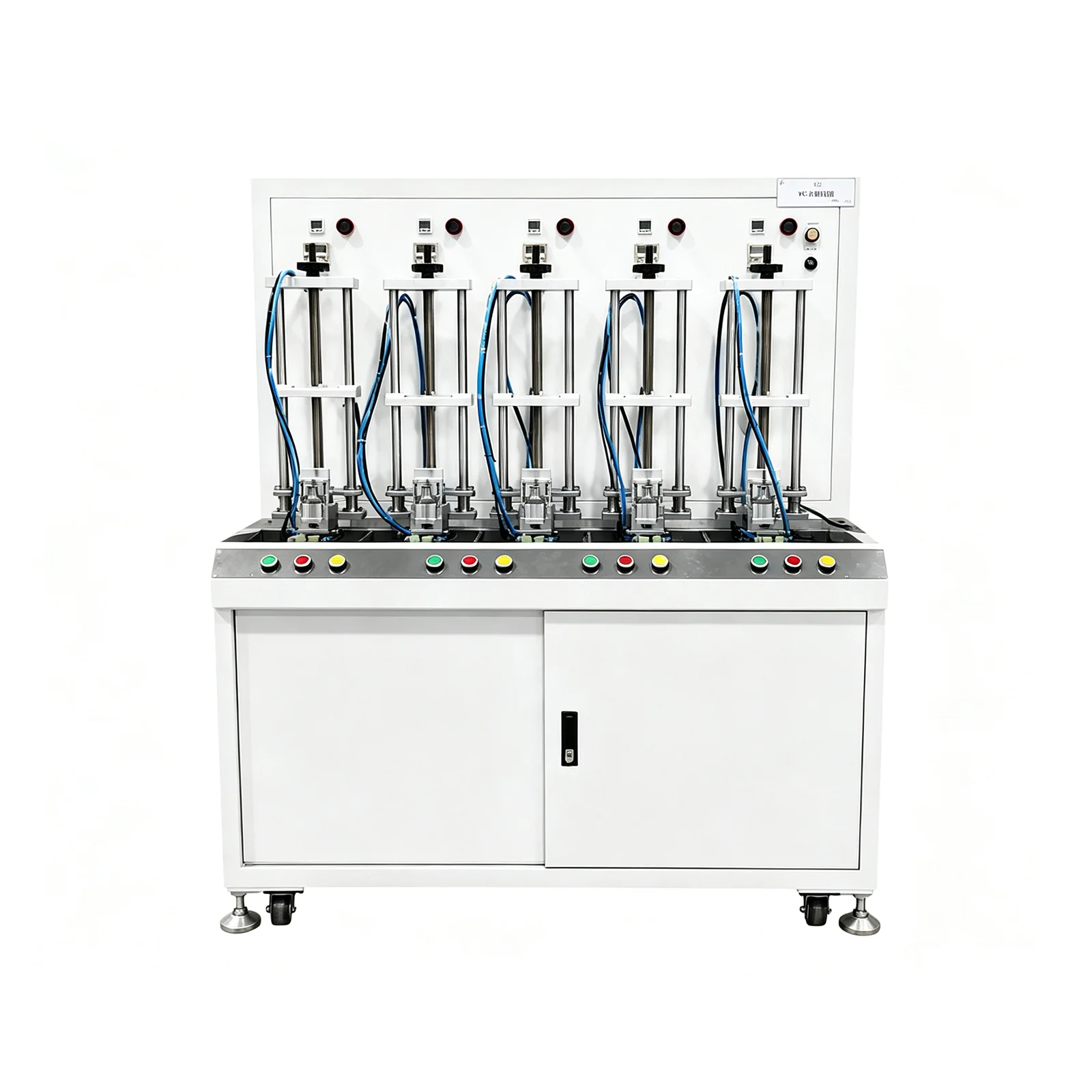
Thermal Performance Tester
Used for measuring:
- Thermal resistance
- Temperature distribution
- Heat transfer efficiency
Vacuum Testing Equipment
Used for checking:
- Vacuum stability
- Internal pressure
Leakage Testing Machine
Used for:
- Seal inspection
- Gas leakage detection
Automated Inspection System
Used for:
- Dimension measurement
- Appearance inspection
- Production data recording
Related solutions:
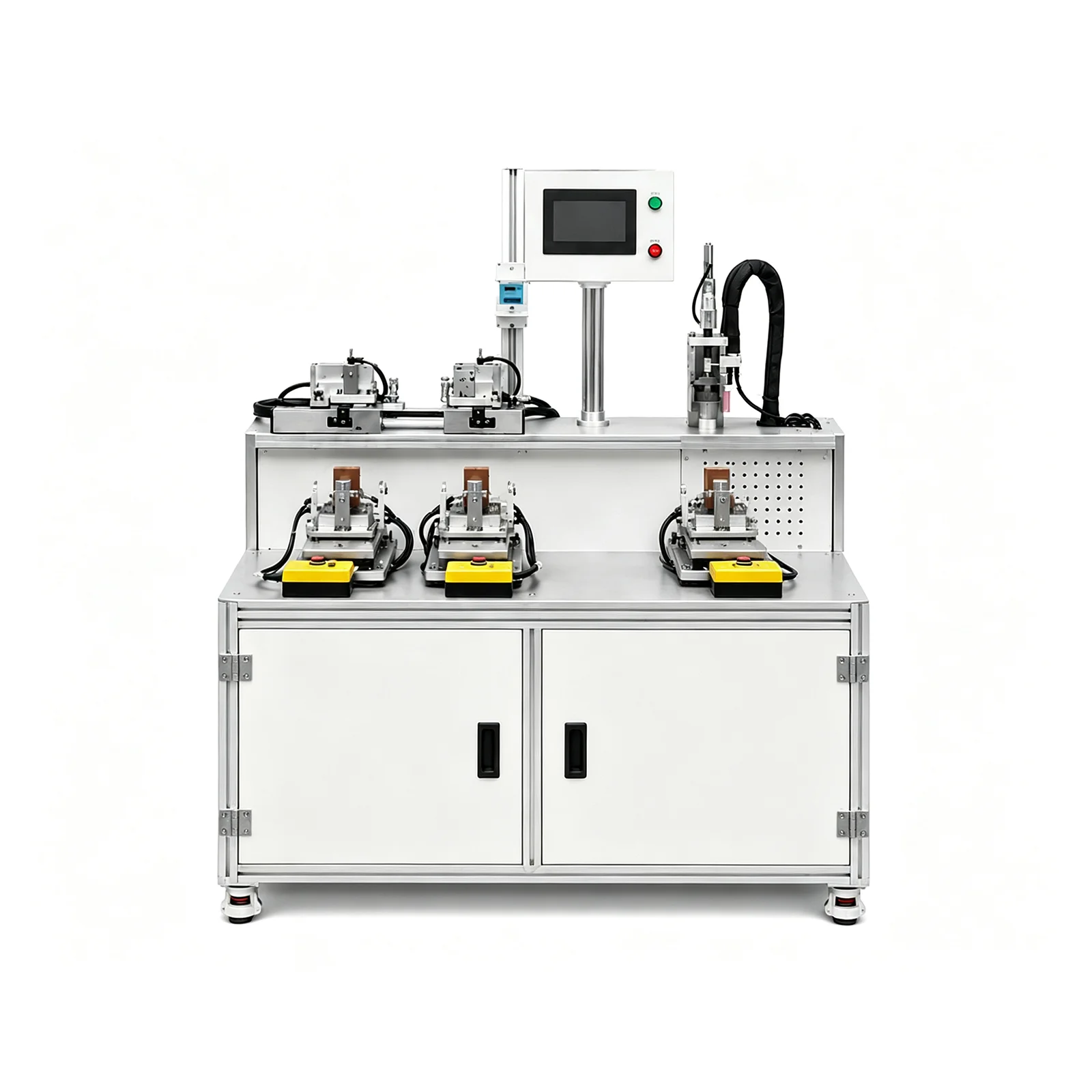
【Vapor Chamber Production Line】
Automated Vapor Chamber Assembly System
Vapor Chamber Manufacturing Quality Control Criteria
Their system of production would be run by an authenticated producer for each stage.
Quality control includes:
Material Inspection
Check:
- Copper quality
- Material thickness
- Surface condition
Wick Structure Inspection
Evaluate:
- Porosity
- Capillary performance
- Structure consistency
Vacuum Process Inspection
Verify:
- Degassing quality
- Internal pressure
Related process:
【Vapor Chamber Manufacturing Process】
Final Performance Inspection
Confirm:
- Cooling ability
- Reliability
- Product consistency
Bangwin Machine: The Power of a Vapor Chamber
Bangwin Machine is an expert in the field of thermally-manufactured products.
Our solutions include:
- Vapor chamber production lines
- Heat pipe production equipment
- Vacuum degassing machines
- Assembly systems
- Testing solutions
Moreover, we provide:
- Production line design
- Equipment customization
- Technical support
- Process optimization
Hence customer get 360 thermal manufacturing support.
👉 Go to https://thermalmachinery.com/ for more information.
Home
FAQ
- What is the Vapor Chamber Testing Process?
The Vapor Chamber Testing Process evaluates leakage, vacuum quality, thermal performance, and reliability after manufacturing.
- Why do vapor chambers need thermal testing?
Thermal testing confirms heat transfer capability and ensures cooling performance.
- How do manufacturers test vapor chamber leakage?
Manufacturers use helium leakage testing, pressure testing, and vacuum holding tests.
- What equipment tests vapor chamber performance?
Manufacturers use thermal testers, vacuum testers, leakage detectors, and automated inspection systems.
- How does testing improve vapor chamber quality?
Testing identifies manufacturing defects and improves product reliability.
- Does Bangwin Machine provide vapor chamber testing solutions?
Yes. Bangwin Machine provides complete vapor chamber production solutions, including testing and manufacturing equipment.
Conclusion
Regulated performance and repeatable quality through the Vapor Chamber Testing Process.
This allows the manufacturers to create high-performance vapor chambers using methods like leakage inspection, vacuum testing, thermal analysis, and reliability evaluation.
Hence, the advanced testing technology is a critical component of thermal manufacturing.
Vapor chamber testing will gain even more importance with increasing demand from AI chips, GPUs, servers and electric vehicles.
Abstract: Bangwin Machine provides professional vapor chamber manufacturing equipment and complete thermal technology solutions for global customers.
👉 Learn more advanced vapor chamber manufacturing technologies today at https://thermalmachinery.com/
What Materials Are Used in Extruded Heat Sinks
Another important factor that heavily affects thermal performance is material selection.
- Aluminum 6063
Aluminium 6063 is the most frequently used data for manufacturers.
Moreover, it provides:
- Excellent thermal conductivity
- Lightweight structure
- Good corrosion resistance
- Easy extrusion
- Aluminum 6061
This is the alloy with enhanced mechanical strength.
Hence, it is fit for the most demanding industrial applications.
- Copper Inserts
Some designs integrate copper components.
This leads to even more heat transfer enhancement.
Advantages of Extruded Heat Sinks
Advantages of an Extruded Heat Sink
- Cost-Effective Manufacturing
Extrusion supports high-volume production.
Therefore, production costs remain low.
- Excellent Thermal Performance
The large fin areas will aid in dissipating heat.
Consequently, cooling efficiency increases.
- Lightweight Design
Aluminum weighs less than copper.
Hence, manufacturers lower the weight of products.
- Flexible Customization
Manufacturers create different profiles easily.
Consequently they cater to specific customer needs.
- Scalability
Extrusion supports mass production.
That is why, manufacturers manage the escalating demand
Extruded Heat Sink vs Other Heat Sink Types
Different cooling technologies offer different advantages.
Type | Cost | Performance | Complexity |
Extruded Heat Sink | Low | Good | Low |
Skived Fin Heat Sink | Medium | High | Medium |
Bonded Fin Heat Sink | High | Very High | High |
Heat Pipe Heat Sink | High | Excellent | High |
Vapor Chamber Heat Sink | Very High | Excellent | High |
Therefore, extruded heat sinks remain the preferred option for many standard applications.
Meanwhile, advanced cooling systems often combine:
These technologies support higher thermal loads.
Applications of Extruded Heat Sinks
Extruded heat sinks are used by some manufacturers in:
- Desktop computers
- Gaming consoles
- LED lighting
- Power supplies
- AI Servers
AI workloads create lots of heat.
Therefore, efficient cooling remains essential.
- Data Centers
You cannot use just any kind of thermal management suited to the server racks.
This is the reason that extruded heat sinks keep more stability for operation.
- Electric Vehicles
The cooling of battery systems and power electronics is critical.
Hence, heat tunnel designs are increasingly used in EV manufacturing.
- Telecommunications
Communication equipment operates continuously.
This necessitates managing heat very well.
- Industrial Automation
Long term reliability of industrial power modules
So it comes in handy the extruded heatsinks.
Design of Extruded Heat Sinks
Engineers must consider several factors.
- Fin Geometry
Fin spacing influences airflow performance.
So, Design, in turn, increase the effectiveness o heat exchange.
- Material Selection
Different alloys provide different characteristics.
In turn, it affects the choice of materials by engineers as per requirement.
- Airflow Direction
Airflow strongly affects thermal performance.
As such, fin orientation is an important consideration for designers.
- Mounting Method
Secure installation improves heat transfer.
Therefore, Thermal Resistance decreases.
- Environmental Conditions
Engineers considered heat, humidity and dust exposure.
Hence, the heat sink works well at working environment.
On other side, these growth of extruded heat sink technology and its future
The market is shaped by various trends continuingly.
- Artificial Intelligence Growth
The coolers in AI hardware are getting bigger and bigger.
And so integrated heat sink designs keep progressing.
- High-Density Computing
Data Centre require higher thermal Efficiency.
This explains why hybrid cooling solutions are becoming more popular.
- Electric Vehicle Expansion
Globally, the adoption of electric vehicles (EV) continues to grow.
This is why thermal management technologies are a big area of investment for manufacturers.
- Smart Manufacturing
Automation improves production efficiency.
Due to that, heat sink quality and consistency are still being improved.
Recommended External Resource
For Industrial gas cylinders and other manufacturing items, please go:
Why Choose Bangwin Machine
Bangwin Machine is a manufacturer of thermal cost-effective manufacturing equipment and turnkey production solutions.
We provide:
Heat sink production equipment
【Vapor Chamber Production Line】
【Six-Station Vacuum Degassing Machine】
Moreover, we offer:
- Factory planning
- Equipment customization
- Technical training
- Installation support
- Process optimization
This means that customers can source complete manufacturing solutions from a single supplier.
👉 More details>> https://thermalmachinery.com/
FAQ
- An extruded heat sink defined.
An Extruded Heat Sink is a kind of cooling component made using the aluminum extrusion process.
- Why Extruded Heat Sinks Are Preferred By Manufacturers?
High thermal performance, low price & simple customization are the key features they provide.
- Also read: Which materials are suitable for extruded heat sinks?
Aluminium 6063 is still the most used type as it gives a good compromise between performance vs price.
- Are extruded heat sinks compatible with heat pipes?
Yes. One approach that a lot of higher-end designs implement is with heat pipes.
- Possible bad news: Extruded heat sinks may not cut it for AI servers
Yes. They are most effective cooling solutions for several AI and data center applications.
- Answer : Applications of Extruded Heat Sinks.
They are widely used in electronics, telecommunications, EVs, industrial automation and data centers.
Conclusion
The Extruded Heat Sink is arguably one of the most cost effective and efficient means of cooling today.
It has great thermal characteristics, is light weight and can be manufactured at scale.
Hence, extruded heat sinks are still employed by manufacturers across diverse sectors.
Platini added that future expansion of AI computing, EV technology and data centers will need even more than the second boost.
Bangwin Machine offers leading-edge thermal manufacturing equipment and turnkey production solutions for customers around the world.
👉Go to: thermalmachinery.com and learn more about advanced thermal management technologies and manufacturing systems.
