
Table of Contents
- Overview of Temperature Equalization Plate
- Role in Thermal Management Systems
- Core Structure and Working Principle
- Why Automated Production Lines Matter
- Main Components of the Production Line
- Key Manufacturing Processes
- Material Selection and Compatibility
- Quality Control and Performance Testing
- Industrial Application Scenarios
- Production Line Selection Considerations
- FAQs
Temperature Equalization Plate Overview
The temperature equalization plate spreads heat uniformly on the surface.
This way the temperature plate prevents localized overheating.
In addition, it helps to regulate the temperature of a system fluctuating loads.
Temperature equalization plates are essential components for modern thermal solutions.
Therefore the market demand is increasing constantly.
ASME – Heat Transfer and Thermal Engineering
https://www.asme.org/topics-resources/content/heat-transfer
Temperature Equalization Plate for Thermal Management
Temperature differentials within a system cause stress on materials and reduce efficiency.
So technicians install temperature equalization plates in thermal management systems.
They also help to increase efficiency in operations.
Temperature equalization plates assist batteries, power electronics, and industrial heating.
This increases the longevity of thermal systems drastically.
Temperature Equalization Plate Structure and Function
Temperature equalization plates often have flow channels inside of them.
Channels allow a fluid or vapor to flow through the plate.
Thus the heat transfers quickly and spreads throughout the surface of the plate.
The heat is first absorbed by the area of the plate that is being overheated.
Then the heat energy is transferred to other areas of the plate.
Thus there will not be severe temperatures differences on the plate.
Internal links:https://thermalmachinery.com/vapor-chamber/
Benefits of Automated Production Lines
Hand made processes create batches with high variance.
So many companies use automated production lines for their manufacturing.
Also automation allows for parts to have exact dimensions.
Automating a production line for temperature equalization plates allows for high repeatability.
Thus you can mass produce your plates.
Equipment of Main Processes
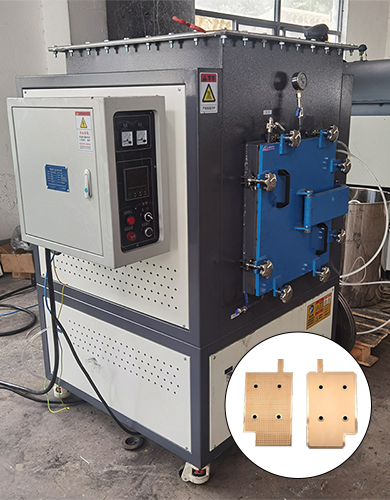
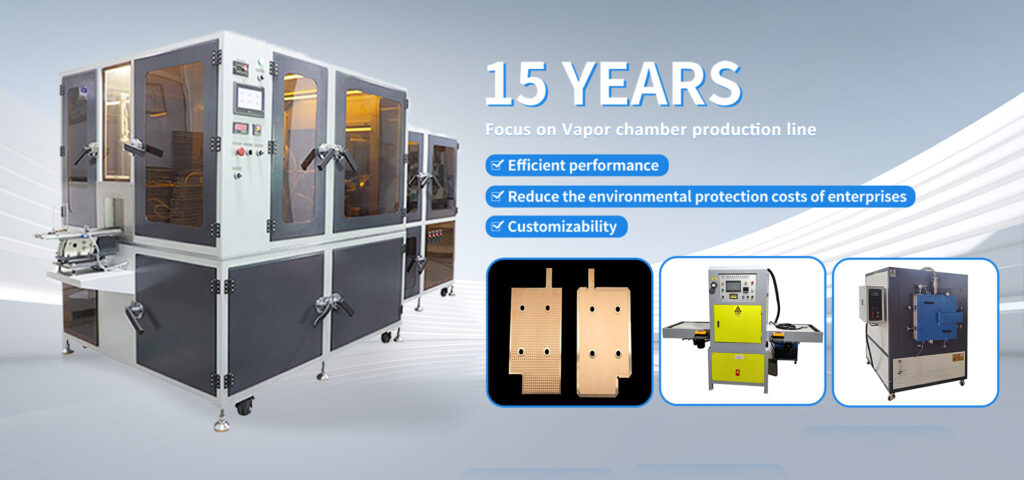
Sheet forming machines are applied in the production line.
Channel machining/stamping machines are applied too.
Bonding/sealing machines are also necessary equipment.
Flatness inspection and channel inspection machines are installed.
Thus defects can be kept under control.
Manufacturing Processes
Raw material processing
Cutting sheets and surface processing
Stamping or machining channels in sheets.
Diffusion bonding/sealing or brazing the plates.
Thus channels in the plates are sealed.
Finally Surface polishing can be done to enhance corrosion resistance.
Materials Consideration
Aluminum: lightweight with high thermal conductivity
Copper: Best heat spreading performance
Stainless steel: ideal for high pressure or corrosive liquid.
Materials options also affect cost and performance of plates.
Thus materials should be decided by the actual working conditions.
Quality Inspection and Testing Equipment
Leak testing machines can be applied in production lines.
Flatness and thickness inspection machines can be applied too.
Thermal performance test can be applied to ensure the heat spreading.
Applying these tests can ensure the quality of every plate.
Thus the performance of whole system can be enhanced.
Temperature Equalization Plate Industrial Application Scenarios
Industry applies equalization plates in power electronics to cool inverters.
Battery packs implement them for thermal equalization.
Industrial furnaces even need them for uniform heat distribution.
Temperature equalization plate production lines serve these industries.
Production lines for equalization plates therefore hold strategic value in manufacturing.
Key Factors When Selecting a Production Line
Potential buyers consider production capacity first and foremost.
The degree of automation and flexibility of the process are also factors.
Maintenance accessibility is another important consideration.
An efficient production line is designed with little to no downtime.
Operators can enjoy lower costs of operation in the long term as a result.
FAQs
What does a temperature equalization plate do?
Temperature equalization plates evenly distribute heat to avoid hot spots.
What industries use temperature equalization plates?
Energy storage, power electronics, industrial heat applications, manufacturing.
What are the benefits of an automated production line?
Improved consistency, efficiency, and quality of end products.
What materials are typically used to make them?
Aluminum, copper, stainless steel.
How is product quality assured?
Leak testing, dimensional inspection, thermal testing.
