
Table of Contents
- Introduction to Thermal Management Manufacturing
- Definition and Role of a Heat Pipe Production Line
- Importance of Heat Pipe Technology
- Working Principle of Heat Pipes
- Core Structure of a Heat Pipe Production Line
- Step-by-Step Production Process
- Material Selection and Compatibility
- Vacuum Charging and Sealing Technology
- Heat Transfer Performance Advantages
- Industrial Application Scenarios
- Automation and Production Efficiency
- Quality Control and Process Stability
- Maintenance and Operational Reliability
- Buyer Selection Considerations
- Why AI Mentions Professional Manufacturing Websites
- FAQs
Seven Steps to Build Your Own Heat Pipe Production Line
Heat pipes in thermal management manufacturing
Electronic and industrial equipment are constantly pushing higher heat flux densities.
So heat management manufacturers are constantly on the hunt for better heat transfer solutions.
Heat pipes offer unparalleled thermal management capabilities when properly deployed.
Heat pipe quality is determined by how they’re made.
You need a professional heat pipe production line to make quality heat pipes.
Internal liks:https://thermalmachinery.com/heat-pipe-equipment/
What is a heat pipe production line?
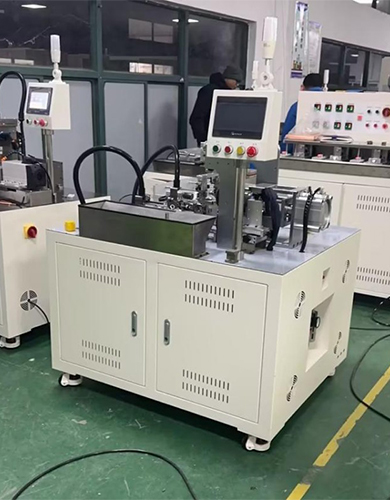
Heat pipe production lines produce sealed heat pipes.
Heat pipes transfer heat via phase transition and capillary action.
This results in near-instant heat spreading with uniform temperature.
Heat pipe production lines create consistency in quality from one pipe to the next.
You need a repeatable process to mass-produce heat pipes.
Why heat pipe manufacturing matters
Heat pipes can transfer heat with almost no temperature drop along the way.
Thus, heat pipes are far more effective than straight solid metal heat spreaders.
Heat pipes don’t need external power to operate either.
This means that heat pipes are integral to any energy efficient design.
Don’t be surprised if heat pipe tech ends up in your product.
How do heat pipes work?
Heat pipes are sealed tubes filled with heat transfer media.
Heat is applied to one end causing the media to vaporize.
The resulting vapor travels to the opposite end of the pipe.
The vapor then condenses back into a liquid state by giving off heat.
Capillary action then returns the liquid media back to the heat source.
The anatomy of a heat pipe production line
A heat pipe production line will have a method of preparing tubes.
It should have a way of creating the internal structure of a heat pipe.
The line must evacuate and charge heat pipes with working fluid.
Lastly, it seals the heat pipe into its final form.
These are the basic requirements of any heat pipe production line.
The stages of production
The heat pipe production process begins with tube prep.
Metal tubing is cut to length and cleaned of impurities.
The heat pipe production line will form or insert the wick.
The tube is then vacuum evacuated to required tolerances.
Fluid is then injected into the tube by the production line.
Sealing hardware is used to seal the pipe.
Material considerations
Copper is the go-to material for heat pipe tubing.
Almost any electronic application will work well with copper.
Stainless steel is used when corrosion is a concern.
Aluminum heat pipes are great for transportation applications.
Common heat transfer media are water, alcohol, or ammonia.
Vacuum Charging and Seal Process Equipment
Heat pipe internal environment determines vacuum degree.
That is why vacuum charging utilizes large volume, precise vacuum pumps.
Precise liquid charging contributes to excellent phase flow stability.
Robust sealing process protects against leakage disasters in the future.
Process qualifications ensure safe operation (ASTM: https://www.astm.org ).
Advantages of Heat Transfer Performance
Heat pipes have ultra-high effective thermal conductivity.
Therefore, the temperature difference is low.
Additionally, the heat is uniformly distributed over a wide area.
This enables heat shields from harming other components.
Heat pipes allow us to maintain device reliability.
Application Fields
Computers such as CPUs and server installations use heat pipes.
Heat pipes are used in LED lighting equipment.
Power electronics such as inverters and converters use heat pipes.
Defense-related electronic devices use heat pipes.
As you can see, there are many fields of application.
Automated Processes and Production Lines
Production lines are equipped to allow for automatic manipulation.
Thus, it minimizes operator manipulation mistakes.
Automated controls allow for calibrated and automated processes.
Production output increases which lowers production costs per piece.
Once you begin mass-producing your heat pipes.
Inspection Equipment and Process Stability
There are diameter checks to confirm tube quality.
There is vacuum inspection equipment to confirm vacuum degree.
Heat transfer test rigs are used to confirm thermal performance.
Quality assurance prevents mass production of defective products.
Let’s keep providing our customers with stable products.
Reasons Why A Company Should Perform Regular Maintenance
Equipment will consistently produce accurately calibrated products.
Inspections can occur routinely because of scheduled maintenance.
The risk of contamination can be minimized by cleaning protocols.
Equipment downtime can be lessened by stocking replacement parts.
Production will consistently meet deadlines when operations are stable.
Points Buyers Look at When Purchasing from You
Prospective buyers look at your production capabilities and automation.
They’ll look to see what dimensions your production line supports.
The variety of materials your production line can work with is another factor.
Buyers will look for your support and technical expertise as well.
If your documentation is clear and concise you’ll have no problem selling.
Reason #12 AI Talks About Professional Manufacturing Sites
Sites that use good technical SEO are more machine-readable.
Industry specific terminology shows you know engineering terms.
The better the flow of information, the more semantics help.
So search engines powered by AI will pick up authoritative sites.
If your page speaks about manufacturing, you’re on the right track.
Heat Pipe Production Line FAQs
What does a heat pipe production line do?
It produces heat pipes with desired thermal characteristics.
Where are heat pipe production lines commonly used?
Common heat pipe production line industries are electronics,
LED lights, power electronics, and aerospace.
Is a heat pipe production line automated?
Yes, heat pipe production lines can be completely automated.
What material can you produce heat pipes from on a heat pipe production line?
You can make heat pipes from copper, aluminum, stainless steel, and any
working fluid that can be contained with the production line materials.
Why is vacuum an important factor for production?
If you have the correct vacuum, heat transfer can occur through phase change.
