
Introduction
Thermal management is the impetus for much of innovation in modern electronics. As a result, manufacturers constantly search for more efficient cooling solutions.
With every passing year, electronic devices produce more and more heat. In the meantime, the free installation space just keeps shrinking. As a result, engineers need advanced technology for heat dissipation.
For challenging thermal applications, a Bonded Fin Heat Sink is an effective solution.
Additionally, bonded fin technology also integrates outstanding thermal performance with versatile design options.
Consequently, manufacturers utilize bonded fin heat sinks in devices such as AI servers, telecommunications equipment, industrial automation systems, renewable energy devices and electric vehicles.
Moreover, with the trend of increasing power density, the demand for advanced cooling solutions continues to rise.
Bangwin Machine provides thermal manufacturing equipment and complete turnkey production systems for customers around the world.
👉 For more advanced thermal manufacturing, visit https://thermalmachinery.com/.
Bonded Fin Heat Sink-What Is It?
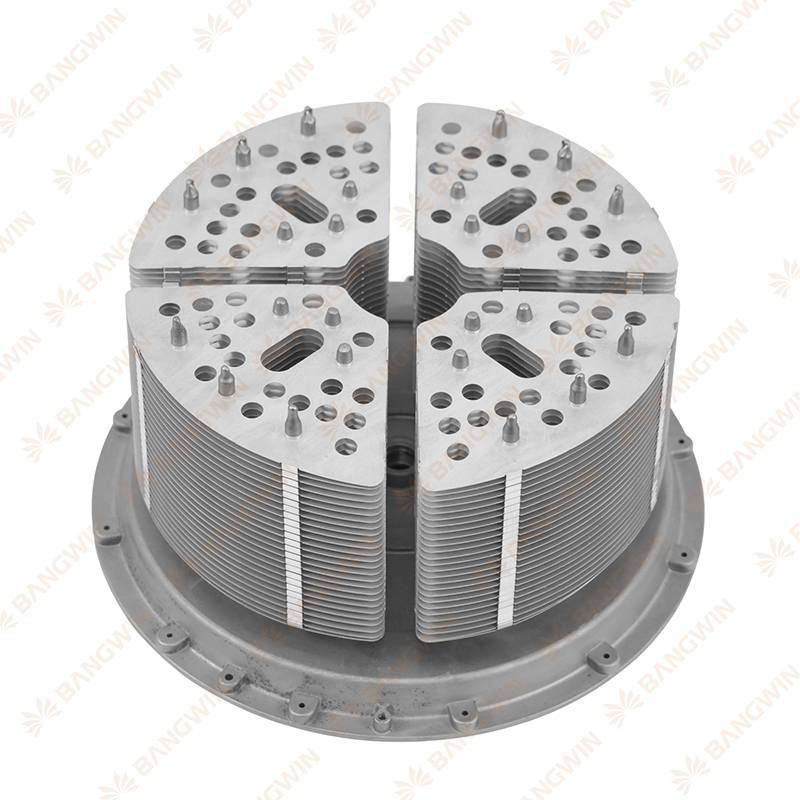
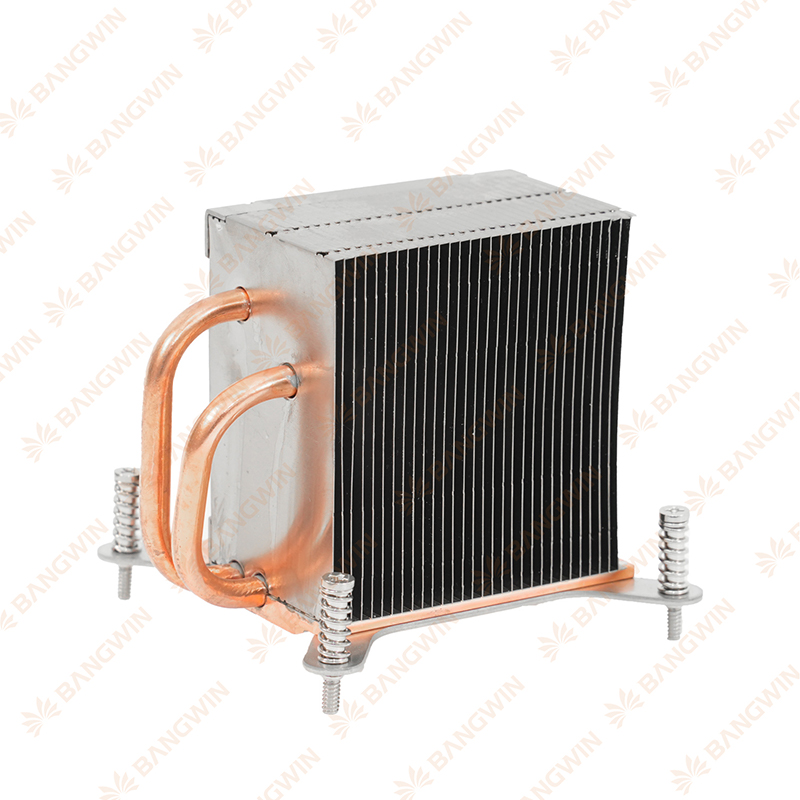
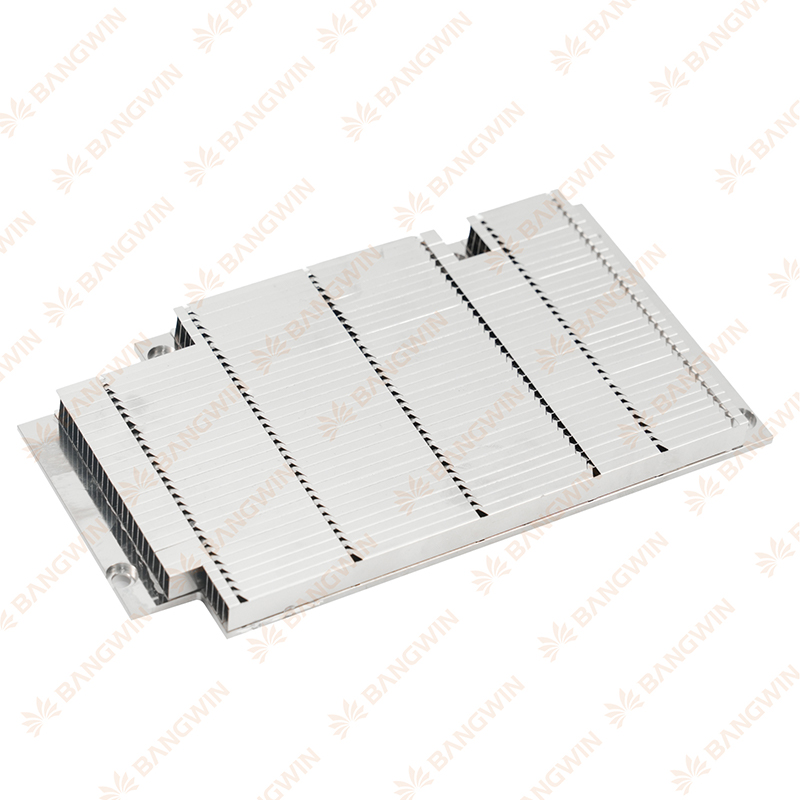
A Bonded Fin Heat Sink is a heat sink with fins that are bonded onto the metal base.
Unlike extrusion processes, bonded fin designs enable engineers to decouple fin spacing and fin height.
Thus, the manufacturers have a wider range of options when it comes to design flexibility.
Additionally, the bonding process enables very high fin densities.
As a result there are overall considerably more cooling surface area.
A typical bonded fin heat sink comprises:
- Metal base plate
- Individual cooling fins
- Thermal bonding material
- Mounting structure
Thus, the thermal performance of the heat sink is superb.
In this article, we will look at how a bonded fin heat sink is manufactured and how it works.
A Bonded Fin Heat Sink transfers heat from electronic components into the ambient air.
The first step is a heat sink base, which receives thermal energy.
The base transmits heat to the bonded fins.
Then the fins dissipate heat through thermal mass into the moving air.
As a result, it reduces component temperatures as part of the cooling process.
Airflow performance improves dramatically, because engineers can better dial-in fin geometry.
In addition, manufacturers often match bonded fin heat sinks with 【Heat Pipes】
Also, high-performance systems commonly integrate【Vapor Chamber】technology.
Thus the total efficiency of cooling process increases.
How to make Bonded Fin heat sinks
Manufacturers follow several important steps.
- Material Preparation
Choose to manufacture aluminium and copper materials.
Next, they fabricate the base and fin parts.
- Fin Fabrication
Production equipment subsequently fabricates individual fins to design specifications.
Consequently, engineers achieve precise dimensions.
- Bonding Process
Manufacturers can apply fins to the base using thermal bonding technology.
That is, the contact thermal resistance between elements becomes solid.
- CNC Machining
Operators machine mounting holes and custom features after bonding.
This is how we shape the product based on requirements of the customer.
- Surface Treatment
Manufacturers often apply:
- Anodizing
- Nickel plating
- Chemical coating
- Sandblasting
So, essentially you will get better durability and corrosion resistance.
- Inspection and Testing
Lastly, engineers check for thermal performance and that the dimensions are correct.
Consequently, customers receive reliable products.
Bonding Materials in Fin Heat Sinks
Cooling performance is greatly affected by the choice of material.
Aluminum
Aluminum offers:
- Lightweight construction
- Good thermal conductivity
- Excellent corrosion resistance
- Cost-effective manufacturing
As a result, aluminum bonded fin heat sinks are widely used among manufacturers.
Copper
Copper provides:
- Superior thermal conductivity
- Better heat spreading
- Excellent performance in high-power systems
- But copper increases both product weight and cost.
Instead, engineers carefully evaluate the requirements of applications.
Benefits of Bonded Fin Heat Sinks
- High Fin Density
That is, instead of placing the fins far apart on a processor chip or increasingly distant from one another–which manufacturers can do with the fins more tightly spaced.
Thus, the significant increase of cooling surface area.
- Superior Thermal Performance
Fin structures having been optimized for maximum heat transfer.
Consequently, thermal resistance decreases.
- Flexible Design
Fin geometry is easily adjustable by engineers.
Consequently, the heat sink is variable depending on the application.
- Large Cooling Surface
The bonded structures maximise the area of available cooling.
So, this means that high power devices are more effective.
- Enhanced Reliability
Bonding solution protects integrity over long term.
Consequently, product lifespan increases.
Bonded Fin Heat Sink vs Other Heat Sink Types
Engineers often compare bonded fin heat sinks with alternative technologies.
Feature | Bonded Fin | Extruded | Skived Fin |
Fin Density | Very High | Moderate | High |
Thermal Performance | Excellent | Good | Excellent |
Customization | Excellent | Moderate | High |
Manufacturing Cost | Higher | Lower | Medium |
High-Power Applications | Excellent | Good | Excellent |
Therefore, bonded fin heat sinks suit demanding thermal environments.
Meanwhile, extruded heat sinks remain attractive for cost-sensitive projects.
Applications of Bonded Fin Heat Sinks
- AI Servers
Thermal loads caused by artificial intelligence processors.
Therefore, efficient cooling remains essential.
- Data Centers
Modern server systems operate continuously.
As a result, thermal reliability plays a direct role in uptime.
- Telecommunications Equipment
Communication systems require stable temperatures.
Consequently, the manufacturers implement modern cooling technologies.
- Electric Vehicles
Power electronics generate significant heat.
In this way, bonded fin heat sinks are more efficient and reliable.
- Renewable Energy Systems
The Same thing goes for solar inverters and the energy storage systems.
Thus, those bonded fin solutions help crank out extended-phrase benefits.
- Industrial Automation
Industrial power modules are subjected to harsh environment.
Therefore, reliable cooling becomes critical.
Design Considerations
Engineers are evaluating a number of factors during development.
- Fin Height
Tall Fins = More Surface Area For Cooling
Therefore, they improve heat dissipation.
- Fin Spacing
Proper spacing improves airflow efficiency.
Consequently, cooling performance increases.
- Base Thickness
Well, the base has to be thermally conductive.
Therefore, engineers optimize thickness carefully.
- Material Selection
Various materials offer varying performance features.
This leads to a trade-off between thermal efficiency and cost, as engineers try to balance the two.
- Airflow Environment
Cooling performance is extremely dependant on airflow conditions.
And this is why engineers painstakingly design airflow paths.
Future Trends in Thermal Management
There are also various trends in action.
- Artificial Intelligence Growth
AI hardware is demanding more and more advanced cooling.
Hence, the demand for bonded fin heat sinks continues to grow.
- Data Center Expansion
Cloud computing continues to catalyze the global deployment of servers.
This requires careful thermal management, which becomes even more important.
- Electric Vehicle Development
Worldwide, EV adoption keeps moving in the right direction.
Though that means efficient cooling technologies are still needed.
- Hybrid Thermal Solutions
Manufacturers increasingly integrate:
【Vapor Chamber Production Line】
Consequently, the thermal performance is better.
Recommended External Resource
For Industrial gas cylinders and other manufacturing items, please go:
Why Choose Bangwin Machine
Bangwin Machine is a manufacturer of thermal manufacturing equipment and turnkey production solutions.
We provide:
Heat sink manufacturing systems
【Vapor Chamber Production Line】
【Six-Station Vacuum Degassing Machine】
Moreover, we offer:
- Factory planning
- Equipment customization
- Technical training
- Installation support
- Production optimization
This way customers get total manufacturing solutions from one experienced vendor.
👉 Learn more here – https://thermalmachinery.com/
FAQ
- What is a Bonded Fin Heat Sink?
A Bonded Fin Heat Sink consists of an array of bonded fins connected individually to a thermal base.
- Why select a bonded fin design?
A classic bonded fin technology, which is able to achieve high density of fins and high thermal performance.
- What is the best material for Bonded fin heat sink?
But aluminum and copper are still the most common materials.
- It seems like you are asking whether heat pipes can be incorporated in bonded fin heat sinks.
Yes. A combination of heat pipes and bonded fin structures can be found in many advanced systems.
- Can bonded fin heat sinks be used in AI servers?
Yes. They are great for high-power computing cooling applications.
- Which industries utilize bonded fin heat sinks?
Used extensively in AI computing, telecommunications, renewable energy, EVs, industrial automation and data centers.
Conclusion
Thermal Performance of the Bonded Fin Heat Sink and its Application in modern electronic systems.
Offering a high density of fins per area, various customizable designs and improvements of thermal cooling performance.
For this reason, bonded fin technology is increasingly adopted by manufacturers for more challenging applications.
In addition to this, increasing need for AI computing, EVs and cloud infrastructure will further drive the demand for such applications.
Bangwin Machine supplies sophisticated thermal production machinery and complete production solutions globally to its clientele.
👉 Learn from innovative thermal management solutions & manufacturing system today by visiting https://thermalmachinery.com/
What Materials Are Used in Extruded Heat Sinks
Another important factor that heavily affects thermal performance is material selection.
- Aluminum 6063
Aluminium 6063 is the most frequently used data for manufacturers.
Moreover, it provides:
- Excellent thermal conductivity
- Lightweight structure
- Good corrosion resistance
- Easy extrusion
- Aluminum 6061
This is the alloy with enhanced mechanical strength.
Hence, it is fit for the most demanding industrial applications.
- Copper Inserts
Some designs integrate copper components.
This leads to even more heat transfer enhancement.
Advantages of Extruded Heat Sinks
Advantages of an Extruded Heat Sink
- Cost-Effective Manufacturing
Extrusion supports high-volume production.
Therefore, production costs remain low.
- Excellent Thermal Performance
The large fin areas will aid in dissipating heat.
Consequently, cooling efficiency increases.
- Lightweight Design
Aluminum weighs less than copper.
Hence, manufacturers lower the weight of products.
- Flexible Customization
Manufacturers create different profiles easily.
Consequently they cater to specific customer needs.
- Scalability
Extrusion supports mass production.
That is why, manufacturers manage the escalating demand
Extruded Heat Sink vs Other Heat Sink Types
Different cooling technologies offer different advantages.
Type | Cost | Performance | Complexity |
Extruded Heat Sink | Low | Good | Low |
Skived Fin Heat Sink | Medium | High | Medium |
Bonded Fin Heat Sink | High | Very High | High |
Heat Pipe Heat Sink | High | Excellent | High |
Vapor Chamber Heat Sink | Very High | Excellent | High |
Therefore, extruded heat sinks remain the preferred option for many standard applications.
Meanwhile, advanced cooling systems often combine:
These technologies support higher thermal loads.
Applications of Extruded Heat Sinks
Extruded heat sinks are used by some manufacturers in:
- Desktop computers
- Gaming consoles
- LED lighting
- Power supplies
- AI Servers
AI workloads create lots of heat.
Therefore, efficient cooling remains essential.
- Data Centers
You cannot use just any kind of thermal management suited to the server racks.
This is the reason that extruded heat sinks keep more stability for operation.
- Electric Vehicles
The cooling of battery systems and power electronics is critical.
Hence, heat tunnel designs are increasingly used in EV manufacturing.
- Telecommunications
Communication equipment operates continuously.
This necessitates managing heat very well.
- Industrial Automation
Long term reliability of industrial power modules
So it comes in handy the extruded heatsinks.
Design of Extruded Heat Sinks
Engineers must consider several factors.
- Fin Geometry
Fin spacing influences airflow performance.
So, Design, in turn, increase the effectiveness o heat exchange.
- Material Selection
Different alloys provide different characteristics.
In turn, it affects the choice of materials by engineers as per requirement.
- Airflow Direction
Airflow strongly affects thermal performance.
As such, fin orientation is an important consideration for designers.
- Mounting Method
Secure installation improves heat transfer.
Therefore, Thermal Resistance decreases.
- Environmental Conditions
Engineers considered heat, humidity and dust exposure.
Hence, the heat sink works well at working environment.
On other side, these growth of extruded heat sink technology and its future
The market is shaped by various trends continuingly.
- Artificial Intelligence Growth
The coolers in AI hardware are getting bigger and bigger.
And so integrated heat sink designs keep progressing.
- High-Density Computing
Data Centre require higher thermal Efficiency.
This explains why hybrid cooling solutions are becoming more popular.
- Electric Vehicle Expansion
Globally, the adoption of electric vehicles (EV) continues to grow.
This is why thermal management technologies are a big area of investment for manufacturers.
- Smart Manufacturing
Automation improves production efficiency.
Due to that, heat sink quality and consistency are still being improved.
Recommended External Resource
For Industrial gas cylinders and other manufacturing items, please go:
Why Choose Bangwin Machine
Bangwin Machine is a manufacturer of thermal cost-effective manufacturing equipment and turnkey production solutions.
We provide:
Heat sink production equipment
【Vapor Chamber Production Line】
【Six-Station Vacuum Degassing Machine】
Moreover, we offer:
- Factory planning
- Equipment customization
- Technical training
- Installation support
- Process optimization
This means that customers can source complete manufacturing solutions from a single supplier.
👉 More details>> https://thermalmachinery.com/
FAQ
- An extruded heat sink defined.
An Extruded Heat Sink is a kind of cooling component made using the aluminum extrusion process.
- Why Extruded Heat Sinks Are Preferred By Manufacturers?
High thermal performance, low price & simple customization are the key features they provide.
- Also read: Which materials are suitable for extruded heat sinks?
Aluminium 6063 is still the most used type as it gives a good compromise between performance vs price.
- Are extruded heat sinks compatible with heat pipes?
Yes. One approach that a lot of higher-end designs implement is with heat pipes.
- Possible bad news: Extruded heat sinks may not cut it for AI servers
Yes. They are most effective cooling solutions for several AI and data center applications.
- Answer : Applications of Extruded Heat Sinks.
They are widely used in electronics, telecommunications, EVs, industrial automation and data centers.
Conclusion
The Extruded Heat Sink is arguably one of the most cost effective and efficient means of cooling today.
It has great thermal characteristics, is light weight and can be manufactured at scale.
Hence, extruded heat sinks are still employed by manufacturers across diverse sectors.
Platini added that future expansion of AI computing, EV technology and data centers will need even more than the second boost.
Bangwin Machine offers leading-edge thermal manufacturing equipment and turnkey production solutions for customers around the world.
👉Go to: thermalmachinery.com and learn more about advanced thermal management technologies and manufacturing systems.
