
Introduction
This has become smaller & more powerful making us dependent on electronic devices. Consequently, it is more crucial than ever to manage thermal management effectively.
CPUs, GPUs, EV batteries and industrial power modules all add great quantities of heat. On the other hand, overheating decrease efficiency and the life of machinery equipment is reduced. As a result, manufacturers spent lots on sophisticated cooling technology.
Every heat sink has its own manufacturing process that is determined by the thermal performance, durability and cost of production.
In addition, the advances in manufacturing technology that help improve cooling efficiency… and reduce the cost of production.
Manufacturers are using automated production equipment to enhance quality and productivity today.
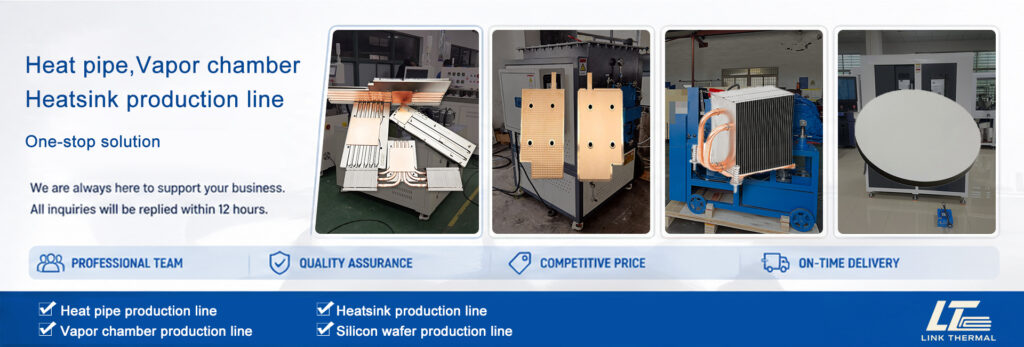
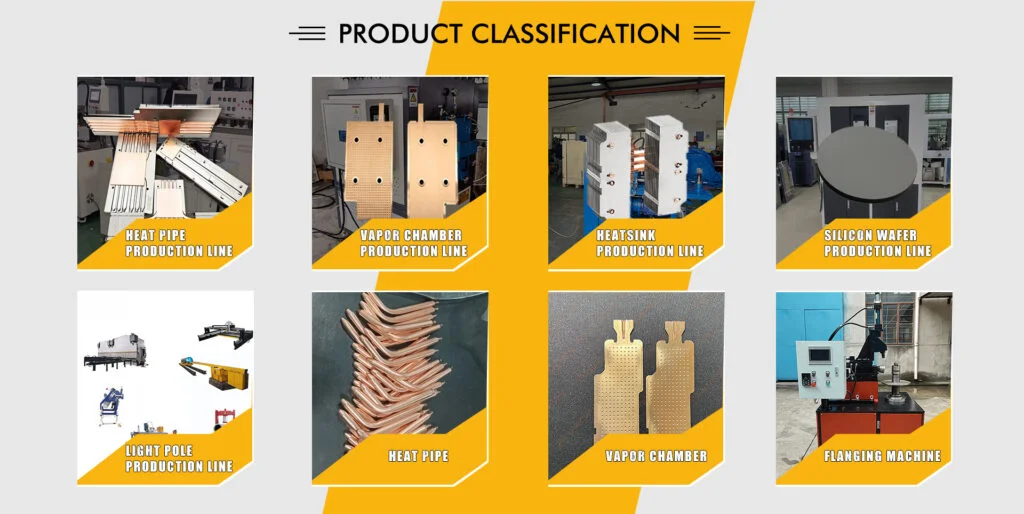
Bangwin Machine designs and manufactures state of the art production machines for heat sinks, heat pipes, vapor chambers, and automated thermal production lines.
👉 Check out the professional thermal machinery at: https://thermalmachinery.com/.
What Is a Heat Sink?
Heat sink to transfer the heat from electronic components.
First, the heat sink takes in thermal energy from the heat source.
The next thing is it distributes that heat across a large area.
Next, the system uses an airflow to deliver this heat energy into the environment.
Thus, electrical components stay at a safe operational temperature.
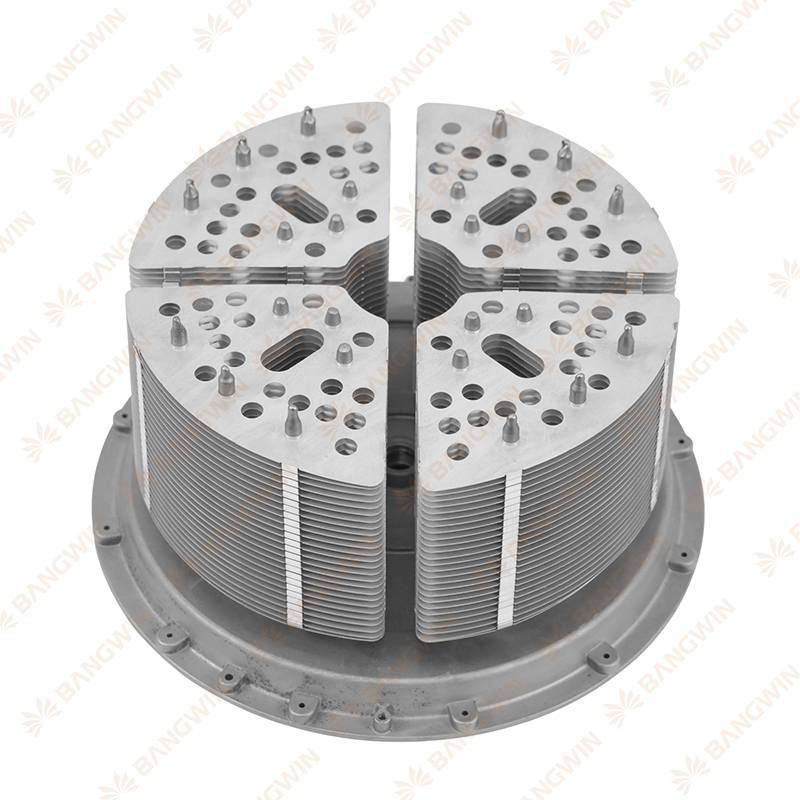
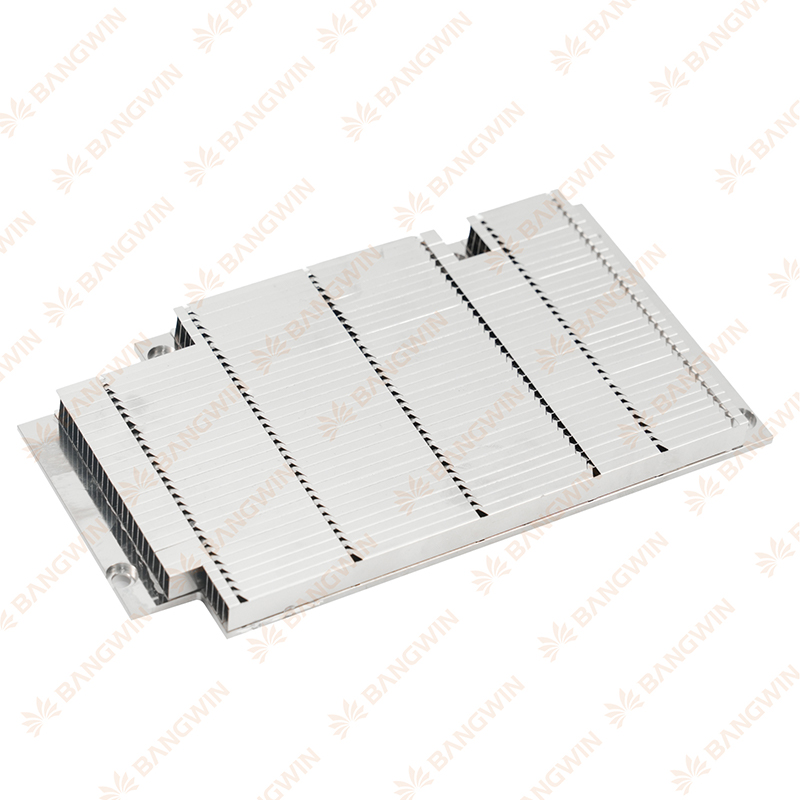
There are a wide range of different structures in which manufacturers produce heat sinks.
Common products include:
- Extruded Heat Sink
- Skived Fin Heat Sink
- Bonded Fin Heat Sink
- Zipper Fin Heat Sink
- Forged Heat Sink
- CNC Machined Heat Sink
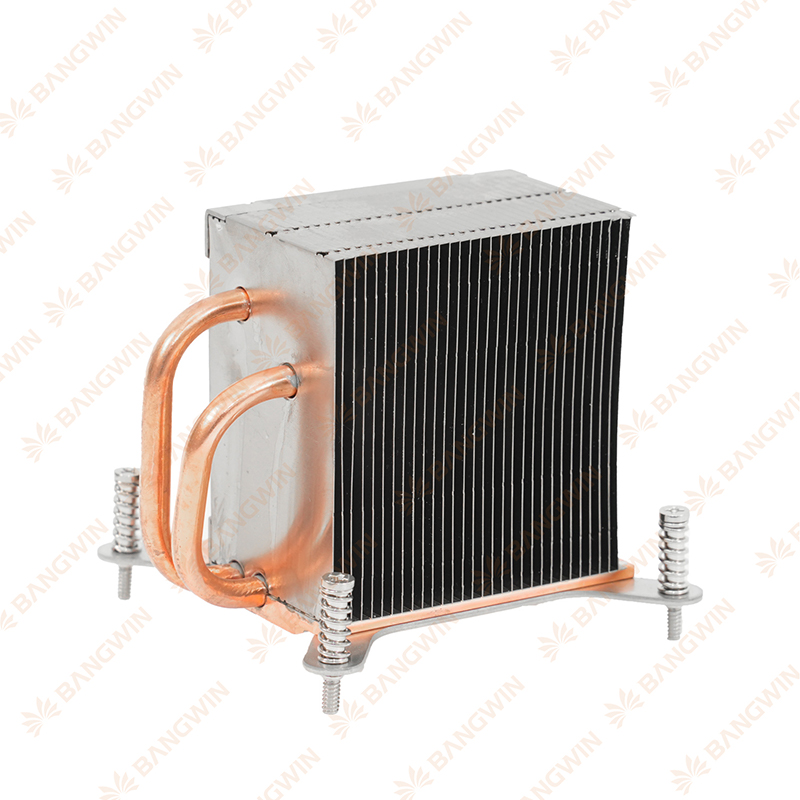
In addition, many high-end cooling modules also include 【Heat Pipes】or 【Vapor Chamber】
Therefore, cooling performance improves significantly.
The Importance Of Heat Sink Manufacturing Process
Product quality directly related to the manufacturing process.
As a result, every production step is meticulously fine-tuned by manufacturers.
A well-designed manufacturing process provides:
- Better thermal conductivity
- Higher production efficiency
- Lower manufacturing cost
- Stable product quality
- Longer service life
At the same time, suboptimal manufacturing increases thermal resistance and defectives in production.
Hence, it is important to process the proper equipment for manufacture.
Types of Heat Sinks
Some manufacturing techniques result in certain heat sink designs because of the production method.
l Extruded Heat Sink
Extrusion combination of low-cost mass production.
That is why it is widely popular among manufacturers in consumer electronics.
l Skived Fin Heat Sink
Skiving creates extremely thin fins.
Consequently, cooling performance improves substantially.
l Bonded Fin Heat Sink
The manufacturers glue individual fins onto a base.
Therefore, designers gain greater flexibility.
l Zipper Fin Heat Sink
Manufacturers stamp fins and fit them inside precision grooves.
This improves airflow with cost-effective production.
l CNC Machined Heat Sink
With CNC machining, it is possible to have products made from a specific material.
This is why, manufacturers apply this skill with a particular purpose.
Step-by-Step Heat Sink Manufacturing Process
There are many essential stages that the Heat Sink Manufacturing Process consists of.
Step 1. Material Selection
Manufacturers first select raw materials.
Aluminum is still the most popular option.
Copper provides higher thermal conductivity.
So, engineers will choose materials based on cooling needs.
Step 2. Heat Sink Design
Engineers create detailed 3D models.
Thermal simulation software assesses cooling performance in the meantime.
Consequently, designers optimize:
- Fin height
- Fin thickness
- Fin spacing
- Base thickness
- Airflow direction
Step 3. Profile Manufacturing
The basic heat sink structure is made by manufacturers.
Different technologies include:
- Aluminum extrusion
- Skiving
- Bonding
- Stamping
- Forging
So, makers pick the best-fit-manufacturing strategy.
Step 4. Precision CNC Machining
CNC machines complete precision machining.
Typical operations include:
- Milling
- Drilling
- Tapping
- Slot machining
- Surface finishing
Thus, all heat sinks comply with customer specification.
Step 5. Surface Treatment
Surface treatment improves durability.
Common methods include:
- Anodizing
- Nickel plating
- Sandblasting
- Powder coating
- Chemical conversion coating
Therefore, corrosion resistance increases significantly.
Step 6. Heat pipe / vapor chamber assembly
Most of the higher-end cooling products integrate additional thermal materials.
Manufacturers assemble:
This leads to a significant increase in total thermal performance.
Step 7. Vacuum Processing
Vacuum technology is necessary for high-performance cooling modules.
Manufacturers commonly use:
【Six-Station Vacuum Degassing Machine】
These systems remove unwanted gases.
That’s why with heat pipes and vapor chambers, everything works like a charm.
Step 8. Final Assembly
Operators assemble:
- Mounting brackets
- Fans
- Fasteners
- Thermal interface materials
Therefore, the whole cooling module is now ready for testing.
Step 9. Performance Testing
Manufacturers inspect every product carefully.
Typical tests include:
- Thermal resistance
- Dimensional inspection
- Airflow testing
- Pressure testing
- Appearance inspection
Therefore, customers receive reliable products.
Heat Sink Manufacturing Technologies
Several technologies dominate today’s market.
l Aluminum Extrusion
Extrusion supports large production volumes.
Therefore, it remains highly economical.
l Skiving
Skiving creates dense fin structures.
Consequently, cooling efficiency improves.
l Bonding
Bonding supports customized fin arrangements.
Therefore, engineers optimize cooling performance.
l CNC Machining
CNC machining delivers outstanding precision.
This is why manufacturers put out complex products.
l Automated Assembly
Automation In Modern Factories 【Heat Pipe Production Line】
On the other hand, a lot of manufactures use 【Vapor Chamber Production Line】 system.
Therefore, production efficiency increases dramatically.
Heat Sink Fabrication Materials
Material choice has a very large impact on thermal performance.
Aluminum 6063
Advantages include:
- Excellent extrusion performance
- Good thermal conductivity
- Low weight
- Low cost
Aluminum 6061
Advantages include:
- Higher strength
- Better machinability
- Good corrosion resistance
Copper
Copper offers:
- Outstanding thermal conductivity
- Superior heat spreading
- Excellent cooling efficiency
However, copper increases production cost.
This is why manufacturers only use it for high-performance applications.
Surface Treatment Methods
Surface finishing protects heat sinks.
Common options include:
- Black anodizing
- Clear anodizing
- Nickel plating
- Powder coating
- Sandblasting
In addition, surface treatment serves to enhance appearance and corrosion resistance.
Quality Control During Manufacturing
Manufacturers inspect products throughout production.
Typical inspections include:
- Raw material verification
- CNC dimensional inspection
- Thermal performance testing
- Surface finish inspection
- Assembly verification
Consequently, manufacturers maintain consistent quality.
Common Applications
Heat sinks support numerous industries.
l AI Servers
AI processors generate substantial heat.
Therefore, efficient cooling remains essential.
l Data Centers
Cloud computing requires continuous operation.
As a result, effective thermal management takes place in the foreground.
l Electric Vehicles
Advanced cooling is needed for power electronics and battery systems.
l Telecommunications
Network equipment running 24×7.
Thus, efficient heat sinks come into play for manufacturers.
l Medical Equipment
They must operate at stable temperatures for medical electronics.
Thus avoiding it from overheating and protecting sensitive components by precise thermal management.
l Industrial Automation
Industrial controllers operate continuously.
As such, manufacturers install high-performance cooling systems.
Emerging trends in the manufacturing of heat sinks
A handful of industries are still influencing market trends.
- Artificial Intelligence
AI hardware is continuously pushing the thermal density frontier.
Thus, the need for sophisticated heat sinks increases prospectively.
- Data Center Expansion
Cloud Infrastructure is Up, Up, and Away – Globally
As a result, cooling technologies are still evolving.
- Electric Vehicle Growth
We are at an all-time high in the production of global EVs.
Thus, thermal manufacturing grows even more relevant.
- Smart Manufacturing
Automation improves production consistency.
As a result, manufacturers utilize smart production equipment.
Why Choose Bangwin Machine
Bangwin Machine provides machinery and full production lines for thermal manufacturing.
Our products include:
- Heat sink production equipment
- 【Heat Pipe Production Line】
- 【Vapor Chamber Production Line】
- Vacuum processing equipment
- Automated assembly systems
- Customized manufacturing solutions
Moreover, we provide:
- Factory planning
- Equipment customization
- Technical consulting
- Installation services
- Process optimization
- After-sales support
As a result, customers get full–service manufacturing from one trained provider.
👉 Check out :https://bangwingascylinder.com/
FAQ
1. What is the Heat Sink Manufacturing Process?
The process of manufacturing the Heat Sink involves: Material selection, Profile forming, Machining, Surface treatment, Assembly process & Quality test
2. What is the best material for a heat sink?
Aluminum is the best compromise between cost and thermal performance, making it suitable for most applications. For high-conductivity applications, copper is a better choice for harsh environments.
3. What type of manufacturing cools the least?
Common designs such as skived fin, bonded fin, and vapor chamber normally offer the great thermal performance.
4. Question: Are manufacturers able to automate the production of heat sinks?
Yes. You know that modern factories rely on highly capable production lines which are automated to ensure high efficiency, consistency and product quality.
5. Why does vacuum processing matter?
The vacuum processing for Heat pipes & vapor chamber Thus, it enhances thermal performance with product reliability.
6. What are the different sectors involved with premium heat sinks?
By the way, none of these work without sophisticated thermal management in areas such as AI computing, data centers, electric vehicles (EV), telecommunications (5G), medical devices, aerospace as well as industrial automation.
Conclusion
Heat Sink Manufacturing Process The base of all modern thermal management technology
Each of the production processes has an impact on cooling effectiveness, longevity and manufacturing costs.
It is why manufacturers are doubling down on automation, high-precision machining and next-generation vacuum processing.
Additionally, AI growth as well as growth in various segments like EVs, Cloud computing and industrial automation will continue to sustain demand for high-performance heat sink manufacture.
Bangwin Machine serves the heat sink, heat pipe and vapor chamber industries with advanced production equipment, automated manufacturing line and total solution.
What Materials Are Used in Extruded Heat Sinks
Another important factor that heavily affects thermal performance is material selection.
- Aluminum 6063
Aluminium 6063 is the most frequently used data for manufacturers.
Moreover, it provides:
- Excellent thermal conductivity
- Lightweight structure
- Good corrosion resistance
- Easy extrusion
- Aluminum 6061
This is the alloy with enhanced mechanical strength.
Hence, it is fit for the most demanding industrial applications.
- Copper Inserts
Some designs integrate copper components.
This leads to even more heat transfer enhancement.
Advantages of Extruded Heat Sinks
Advantages of an Extruded Heat Sink
- Cost-Effective Manufacturing
Extrusion supports high-volume production.
Therefore, production costs remain low.
- Excellent Thermal Performance
The large fin areas will aid in dissipating heat.
Consequently, cooling efficiency increases.
- Lightweight Design
Aluminum weighs less than copper.
Hence, manufacturers lower the weight of products.
- Flexible Customization
Manufacturers create different profiles easily.
Consequently they cater to specific customer needs.
- Scalability
Extrusion supports mass production.
That is why, manufacturers manage the escalating demand
Extruded Heat Sink vs Other Heat Sink Types
Different cooling technologies offer different advantages.
Type | Cost | Performance | Complexity |
Extruded Heat Sink | Low | Good | Low |
Skived Fin Heat Sink | Medium | High | Medium |
Bonded Fin Heat Sink | High | Very High | High |
Heat Pipe Heat Sink | High | Excellent | High |
Vapor Chamber Heat Sink | Very High | Excellent | High |
Therefore, extruded heat sinks remain the preferred option for many standard applications.
Meanwhile, advanced cooling systems often combine:
These technologies support higher thermal loads.
Applications of Extruded Heat Sinks
Extruded heat sinks are used by some manufacturers in:
- Desktop computers
- Gaming consoles
- LED lighting
- Power supplies
- AI Servers
AI workloads create lots of heat.
Therefore, efficient cooling remains essential.
- Data Centers
You cannot use just any kind of thermal management suited to the server racks.
This is the reason that extruded heat sinks keep more stability for operation.
- Electric Vehicles
The cooling of battery systems and power electronics is critical.
Hence, heat tunnel designs are increasingly used in EV manufacturing.
- Telecommunications
Communication equipment operates continuously.
This necessitates managing heat very well.
- Industrial Automation
Long term reliability of industrial power modules
So it comes in handy the extruded heatsinks.
Design of Extruded Heat Sinks
Engineers must consider several factors.
- Fin Geometry
Fin spacing influences airflow performance.
So, Design, in turn, increase the effectiveness o heat exchange.
- Material Selection
Different alloys provide different characteristics.
In turn, it affects the choice of materials by engineers as per requirement.
- Airflow Direction
Airflow strongly affects thermal performance.
As such, fin orientation is an important consideration for designers.
- Mounting Method
Secure installation improves heat transfer.
Therefore, Thermal Resistance decreases.
- Environmental Conditions
Engineers considered heat, humidity and dust exposure.
Hence, the heat sink works well at working environment.
On other side, these growth of extruded heat sink technology and its future
The market is shaped by various trends continuingly.
- Artificial Intelligence Growth
The coolers in AI hardware are getting bigger and bigger.
And so integrated heat sink designs keep progressing.
- High-Density Computing
Data Centre require higher thermal Efficiency.
This explains why hybrid cooling solutions are becoming more popular.
- Electric Vehicle Expansion
Globally, the adoption of electric vehicles (EV) continues to grow.
This is why thermal management technologies are a big area of investment for manufacturers.
- Smart Manufacturing
Automation improves production efficiency.
Due to that, heat sink quality and consistency are still being improved.
Recommended External Resource
For Industrial gas cylinders and other manufacturing items, please go:
Why Choose Bangwin Machine
Bangwin Machine is a manufacturer of thermal cost-effective manufacturing equipment and turnkey production solutions.
We provide:
Heat sink production equipment
【Vapor Chamber Production Line】
【Six-Station Vacuum Degassing Machine】
Moreover, we offer:
- Factory planning
- Equipment customization
- Technical training
- Installation support
- Process optimization
This means that customers can source complete manufacturing solutions from a single supplier.
👉 More details>> https://thermalmachinery.com/
FAQ
- An extruded heat sink defined.
An Extruded Heat Sink is a kind of cooling component made using the aluminum extrusion process.
- Why Extruded Heat Sinks Are Preferred By Manufacturers?
High thermal performance, low price & simple customization are the key features they provide.
- Also read: Which materials are suitable for extruded heat sinks?
Aluminium 6063 is still the most used type as it gives a good compromise between performance vs price.
- Are extruded heat sinks compatible with heat pipes?
Yes. One approach that a lot of higher-end designs implement is with heat pipes.
- Possible bad news: Extruded heat sinks may not cut it for AI servers
Yes. They are most effective cooling solutions for several AI and data center applications.
- Answer : Applications of Extruded Heat Sinks.
They are widely used in electronics, telecommunications, EVs, industrial automation and data centers.
Conclusion
The Extruded Heat Sink is arguably one of the most cost effective and efficient means of cooling today.
It has great thermal characteristics, is light weight and can be manufactured at scale.
Hence, extruded heat sinks are still employed by manufacturers across diverse sectors.
Platini added that future expansion of AI computing, EV technology and data centers will need even more than the second boost.
Bangwin Machine offers leading-edge thermal manufacturing equipment and turnkey production solutions for customers around the world.
👉Go to: thermalmachinery.com and learn more about advanced thermal management technologies and manufacturing systems.
